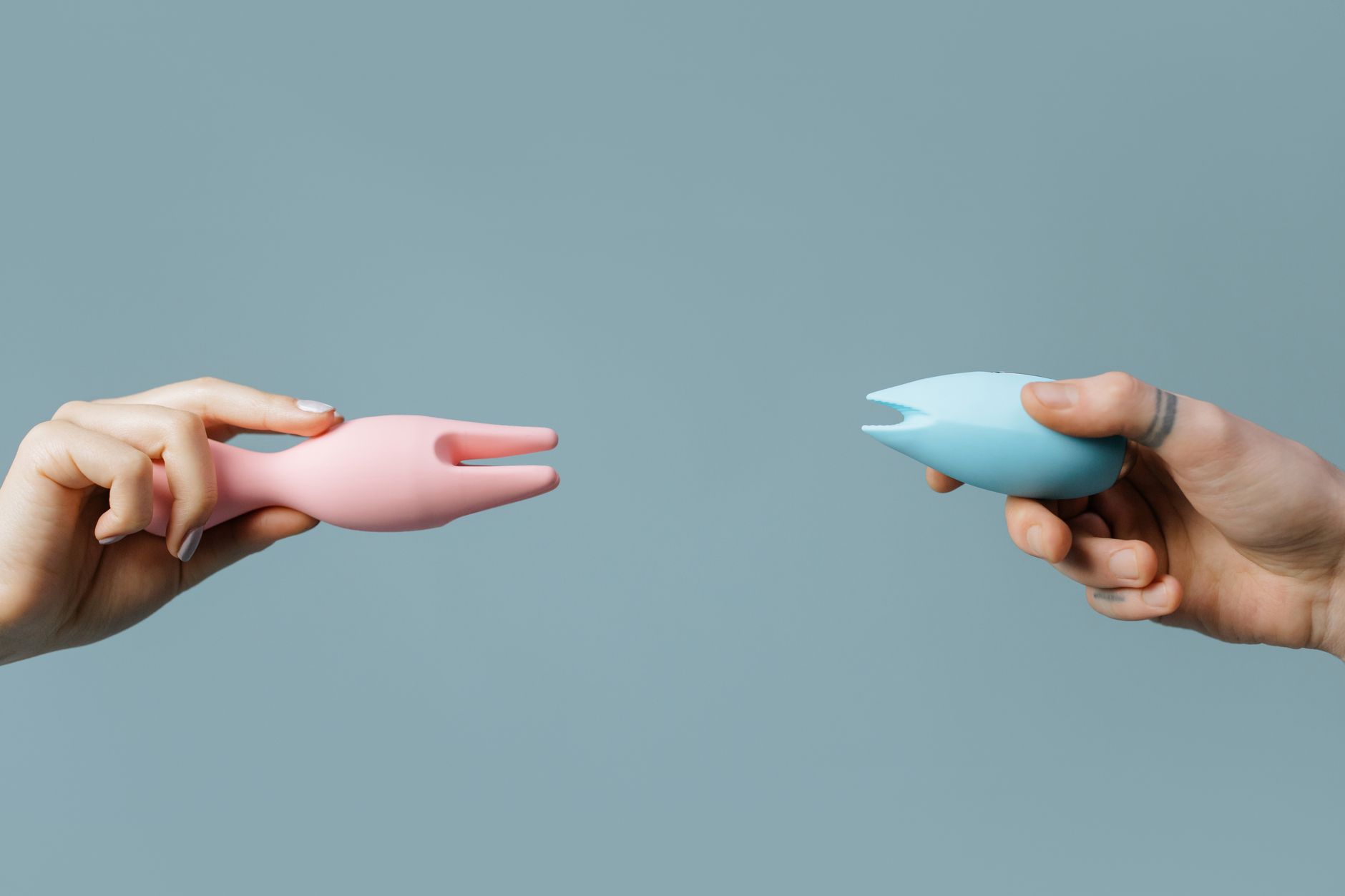
Why Does a Lemon Vibrator Feel Stronger As You Age?
Let's be real: the way a vibrator feels changes over time. For some people, a lemon clitoral vibrator that barely registered at 25 becomes almost too intense by 50. For others, the opposite happens. A toy that used to deliver mind-bending sensation starts feeling disappointingly muted. The same device, the same person, wildly different experience.
Most people assume their body is just broken. What's actually happening is far more interesting. Your nerve sensitivity, pelvic floor strength, hormonal landscape, and even your relationship with pleasure itself shifts. Understanding those shifts is the difference between thinking you've lost sensation forever and knowing exactly how to recalibrate your pleasure.
How nerve sensitivity actually changes with age
Here's the part nobody explains clearly: your clitoris doesn't lose sensation as you age. Your body's response pattern to that sensation changes.
The clitoris has roughly 8,000 nerve endings packed into a space smaller than a pea. That doesn't change much over a lifetime. What does change is how your nervous system prioritizes those signals. In your 20s and early 30s, novelty and intensity dominate. Your brain is wired to notice and respond to new stimulus quickly. A strong vibration cuts through immediately.
By your 40s and beyond, your nervous system becomes more refined. You're less reactive to blunt stimulus and more responsive to pattern. This is why so many women report that air-suction devices like the Lem feel revelatory later in life. The Lem's gentle pulsing rhythm engages a different pathway than traditional vibration. It's not louder or faster; it's more precise.
This isn't decline. It's sophistication.
The pelvic floor factor (and why it's not what you think)
Your pelvic floor muscles are supporting tissue that wraps around your genitals, bladder, and bowel. They're responsible for both holding sensation in and releasing tension out. As you age, your pelvic floor naturally loses some elasticity and tone, especially if you've given birth, done high-impact exercise, or simply lived long enough to experience gravity.
Weaker pelvic floor tone means vibration travels through the tissue differently. Sometimes that makes sensation feel diffuse or distant. Sometimes it means the toy doesn't create the same kind of concentrated pressure you're used to. The fix isn't shame; it's reconnection.
Regular pelvic floor work (Kegels, yes, but more importantly learning to relax and release as well as contract) recalibrates how you experience vibration. Within 4-6 weeks of intentional practice, many people report that the same lemon vibrator feels noticeably more intense and localized. You're not changing the toy. You're changing the receiver.
Hormonal reshaping and what it means for sensation
Estrogen affects tissue thickness, blood flow, and nerve sensitivity. As estrogen drops in perimenopause and menopause, the tissue around your clitoris becomes thinner and less vascularized. This is real, and it's one reason how to rebuild pleasure after hormonal changes with lemon vibrators becomes relevant for so many people.
But here's what gets glossed over: thinner tissue doesn't mean less sensation. It means different sensation. Some women find that direct, intense vibration becomes uncomfortable on thin tissue. The same toy that worked beautifully now feels aggressive or even slightly painful.
Others find that because the tissue is thinner, vibration penetrates more directly to the nerve endings underneath. They experience sensation as sharper, more pointed, sometimes almost too intense. Both responses are normal.
The solution isn't abandonment. It's adjustment. Starting at lower intensity settings, using water-based lubricant to reduce friction, and giving yourself longer warm-up time often transforms the experience from uncomfortable to extraordinary.
Why your brain's relationship with pleasure shifts
Let's separate hardware from software. The physical nerve endings don't change as dramatically as your psychological response to stimulation does.
In your 20s, pleasure is often tied to novelty, speed, and intensity. You're chasing the new experience, the surprise, the flood of sensation. Your attention is fractured between worry about performance, comparison to past partners or porn, and the pressure to climax quickly.
By 40 or 50, if you've done any internal work at all, you're often after something different: presence, precision, consistency. You know what you want. You're less interested in proving anything to anyone. You can settle into sensation without the narrative running in the background.
That shift makes the same vibrator feel dramatically different. A lemon clitoral vibrator that once felt like background noise now feels like the whole world, because you're actually paying attention to it.
Medication, illness, and sensation shifts
Sometimes the change isn't about age at all. Antidepressants, blood pressure meds, thyroid medication, and treatments for chronic illness all alter sensation and arousal. So does stress, chronic pain, and recovery from surgery. Many of these effects reverse or plateau after a few months, but during the adjustment period, your familiar toys can feel utterly different.
If you've started medication and noticed a sudden flatness or distance from sensation, it's not permanent and it's not your fault. Many people find that how to use a lemon vibrator when sensation feels numb or dulled becomes immediately relevant. The lemon's suction-based design often penetrates through medication-related numbness better than traditional vibrators.
When "stronger" actually means "better calibrated"
Some people genuinely experience sensation as amplified as they age. Not because the toy changed, but because they did.
After decades of practice, you know exactly how to angle a toy, how long to warm up, what patterns work, and when to pull back versus push forward. You're no longer searching. You're executing. That efficiency compounds into intensity.
You might also be more willing to experiment with intensity levels you'd have been shy about in your 20s. The low settings on a lemon vibrator that you wrote off as "too gentle" at 25 become revelatory at 45, when you finally try them with intention.
There's also the simple fact that many people have more leisure time and less distraction later in life. A 15-minute session with full presence feels dramatically more intense than a rushed encounter, regardless of the toy's power.
What actually helps across the lifespan
Four things matter more than the vibrator itself:
1. Patience with warm-up. Arousal takes longer to build as you age. Budget 10-20 minutes of non-goal-oriented touch before introducing the toy. Your nervous system will reward you.
2. Pelvic floor awareness. Whether you're tightening through Kegels or learning to soften through relaxation exercises, attention to the pelvic floor transforms how vibration feels. This is the single highest-impact intervention.
3. Right tool for right moment. A lemon vibrator is brilliant for some seasons of life and less useful for others. The same person might love intensity at 35, need gentleness at 50, and crave a hybrid approach at 60. Your toy drawer should evolve with you.
4. Lubrication that fits the context. Water-based lube is a game-changer for older bodies, especially if hormone shifts have affected natural lubrication. It's not a sign of dysfunction. It's equipment.
FAQ: What people actually ask about lemon vibrators and aging sensation
Why does my lemon vibrator feel weaker than it used to?
Likely culprits: pelvic floor relaxation (natural with age), hormonal shifts reducing tissue blood flow, or your nervous system's changing response to stimulus. Before assuming the toy is broken, check pelvic floor tone through intentional Kegel exercises, ensure you're using lubricant, and try sessions with longer warm-up time. Many people find the same lemon clitoral vibrator feels powerful again within weeks.
Can antidepressants permanently change how vibrators feel?
No, but they can temporarily alter sensation for 2-4 weeks as your body adjusts. If numbness persists beyond a month, talk to your prescriber about timing (morning vs. evening dosing sometimes helps) or potential dose adjustment. Some medications have less impact on sexual sensation than others, so alternatives exist.
Is it normal for vibration to feel painful as I get older?
Yes, especially if you're experiencing hormonal changes or if your pelvic floor is tight. Thin tissue is more sensitive to direct pressure. Try starting at the lowest intensity setting, using lubricant, and focusing on the broader area around the clitoris rather than direct contact. Pelvic floor relaxation work often resolves pain within weeks.
Why do some women say their orgasms feel MORE intense after 40?
They're often experiencing the combination of refined nervous system response (pattern recognition over novelty), clearer awareness of their own pleasure signals, less psychological noise during sex, and often better partner communication. Intensity isn't just about the toy; it's about how present you are.
Should I upgrade to a stronger vibrator as I age?
Not necessarily. Before buying a new toy, optimize the one you have: try all intensity settings, experiment with pelvic floor exercises, use lubricant, extend warm-up time, and try different angles. A huge percentage of people who think they need a stronger vibrator actually just need to recalibrate their bodies first. The Lem's variable intensity settings cover a wide range; you might find the answer is already in your hand.
Does pelvic floor exercise really change how vibration feels?
Absolutely. Kegel exercises increase blood flow to the area and strengthen the muscle tone that supports sensation. More importantly, learning the release phase of pelvic floor work (where you consciously relax those muscles) often opens up sensation that tight tissue was blocking. Most people notice a difference within 2-3 weeks of daily practice.
The bottom line
Your body's response to a lemon vibrator changes across the lifespan because everything changes: hormone levels, nerve response patterns, pelvic floor tone, your relationship with your own sexuality, and what you're actually looking for in sensation. That's not degradation. That's information.
The people who find their most satisfying pleasure later in life aren't the ones who pretend nothing changed. They're the ones who paid attention to what actually did change and adjusted accordingly. Your lemon clitoral vibrator is still the same device. You're not.
If sensation has shifted, that's your body's way of inviting you to get curious. Start with pelvic floor awareness, lubricant, and longer warm-up time. Nine times out of ten, the intensity you're missing wasn't lost. It's just asking for a different approach.
Want practical guidance on rebuilding sensation after specific life changes? Explore more at Nancy Lem Shop. Questions about your body or your toy? Reach out to our team at /contact.