Let's be real about performance pressure
Performance anxiety in bed isn't just nerves. It's your brain running a constant commentary track while your body tries to do the thing. You're monitoring yourself, evaluating yourself, wondering if you're taking too long, if your partner is bored, if you're doing it right. That soundtrack? It's the opposite of arousal.
Here's the thing that most sex advice misses: you can't think your way out of performance anxiety by "just relaxing." Your nervous system is in a threat response, and telling it to chill doesn't work. You need to redirect the entire experience so your body remembers what pleasure actually feels like without the judgment.
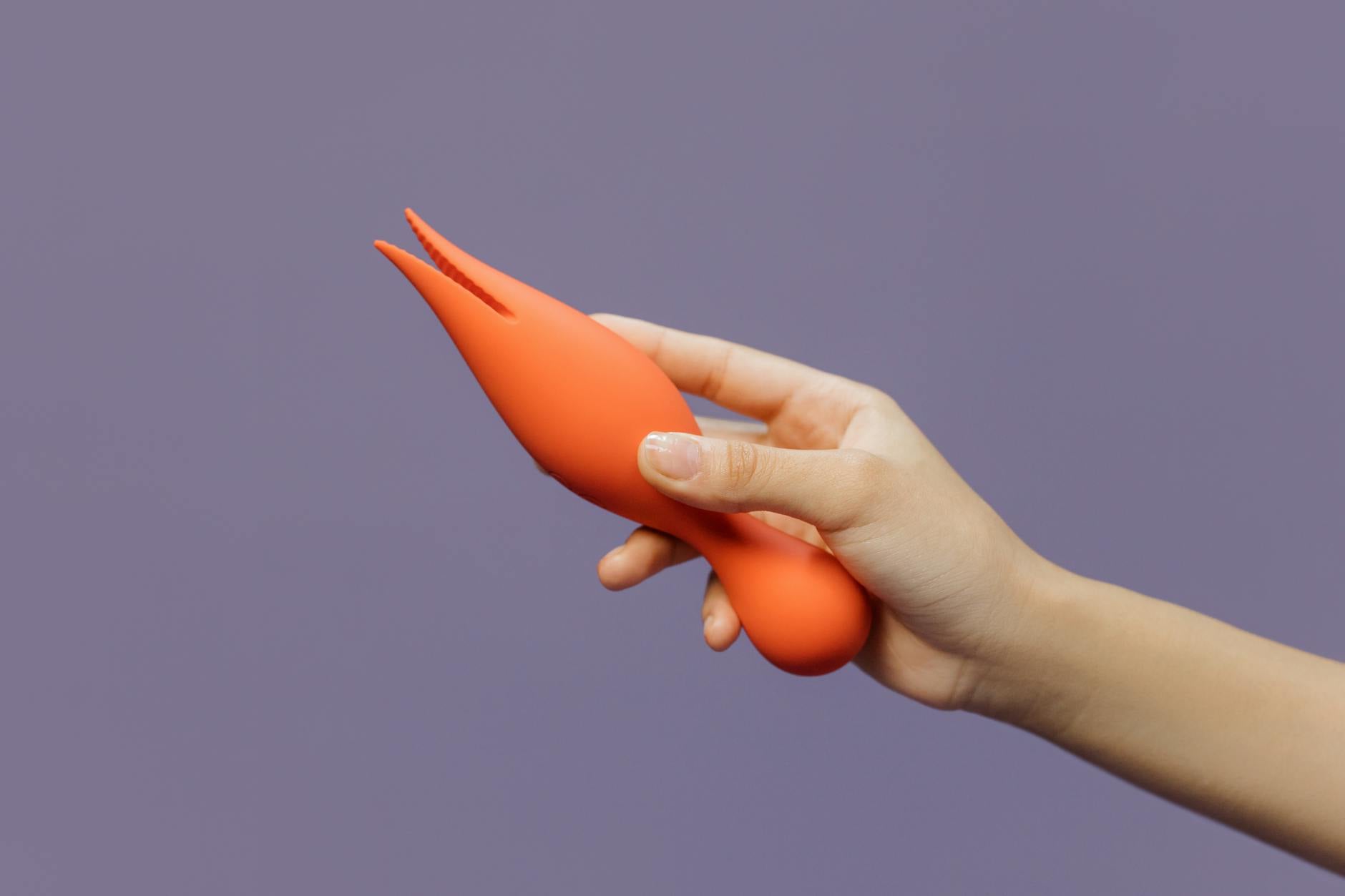
A lemon clitoral vibrator, specifically the suction-based kind, is one of the best tools for breaking that cycle because it removes the "performance" part entirely. You're not performing. You're receiving sensation, and that distinction rewires everything.
Why performance pressure shuts down pleasure
When you're anxious about how you're supposed to be responding, your sympathetic nervous system (the fight-flight side) is active. Your pelvic floor is tense. Your breath is shallow. Blood flow to your genitals actually decreases because your body is in survival mode, not pleasure mode.
Meanwhile, your prefrontal cortex (the thinking part of your brain) is hyperactive, which suppresses the limbic system (the feeling part). You're literally thinking instead of sensing. The longer you stay in that loop, the more your brain learns that sex equals evaluation, not sensation.
That's why traditional vibrators sometimes don't help. They still require you to "do" something, to orchestrate your own pleasure. With performance anxiety, doing feels like performing, so you're still stuck in your head.
How suction changes the game
A lemon suction vibrator works differently than a traditional toy because it doesn't require you to guide it, angle it, or choreograph your response. You place it and it does the work. That small shift moves you from performer to receiver.
But there's something even more important happening: suction stimulates the nerves in a way that makes it genuinely hard to stay in your head. The sensation is novel enough that your attention is pulled down into your body. You can't worry about how you look or whether you're doing it right when your nervous system is being flooded with a sensation it's never quite felt before.
This isn't magic. It's neuroscience. When your sensory input becomes interesting enough, your brain stops the commentary. That's called somatic redirection, and it's one of the most effective ways to reset a nervous system stuck in performance mode.
Using a lemon vibrator solo to reset your baseline
If you're dealing with performance anxiety, solo sessions with a lemon clitoral vibrator are your foundation. This isn't about orgasm as the goal. This is about remembering what sensation feels like without an audience (even an imagined one).
Start in a position where you feel safe and private. Set a time when you know you won't be interrupted. Use the vibrator on the lowest setting first. The goal is to notice what you're feeling, not to chase an outcome.
You'll probably notice your brain trying to narrate things: "Is this working? Am I taking too long? Should I be more turned on by now?" When that happens, just notice the thought and redirect to the sensation. What does the suction actually feel like? Is it more intense on the left side or the right? Where do you want more pressure?
Do this three or four times before you even think about partnered sex. Your nervous system needs to learn that pleasure can exist without judgment.
Reintroducing your partner without the pressure
Once you've reconnected with sensation solo, bringing a partner into the picture requires a different conversation than usual. You're not inviting them to "perform sex" with you. You're inviting them to be present while you receive pleasure.
That language matters. Instead of "I want to use a toy," try "I want to focus on sensation for a bit. I'm going to use a lemon vibrator and I'd love for you to be here with me." The partner is not in charge of your pleasure. They're a witness to it.
This actually reduces pressure on both of you. Your partner isn't responsible for making you come. You're not responsible for "performing" arousal for them. Everyone gets to relax.
If you're used to compensating for anxiety by being extra enthusiastic or vocal, expect to feel weird being quieter. That's normal. You're redirecting energy from performing to sensing, and that sometimes looks less animated. That's fine. In fact, it's better. It's honest.
Managing the thought patterns that come up
Performance anxiety usually has a script: "I'm taking too long." "My partner must be bored." "I should be more responsive." "This is awkward." That script runs whether it's true or not.
When you're using a lemon vibrator, write down the thoughts that come up. Don't judge them. Just notice them. You'll probably see a pattern: the same worry repeating in different words.
Then ask yourself: what evidence do I actually have that this thought is true? Usually, the evidence is thin. Your partner might be absolutely fine. You might be taking a totally normal amount of time. But anxiety doesn't care about evidence. It cares about the story it's telling.
One way to interrupt that pattern: have your partner tell you what they're actually experiencing. Not what they think you want to hear. What they actually notice. Most people with performance anxiety are shocked to discover their partner is enjoying the calm focus, the slower pace, the fact that they're present instead of anxious.
When to involve a therapist
If performance anxiety is severe enough that you're avoiding sex entirely, or if it's connected to past trauma or shame, a therapist (especially one trained in somatic therapy) can help rewire the nervous system response more systematically.
What I see in my practice is that many people with performance anxiety also have a history of being evaluated or criticized, sometimes in childhood, sometimes in previous relationships. That's not something a lemon vibrator can fix alone. But paired with professional support, it's a powerful tool for rebuilding trust in your own body.
The goal isn't to become a high performer in bed. The goal is to get your nervous system out of threat mode so you can feel pleasure without narration, judgment, or fear. That's when real intimacy becomes possible.
Frequently asked questions
How long does it take to rewire performance anxiety with a vibrator?
Most people notice a shift after about four to six sessions of solo play, but it depends on how deep the anxiety goes. If it's linked to past criticism or trauma, expect it to take longer. The vibrator is a tool, not a cure. What matters is consistent practice of receiving sensation without judgment.
Can I use a lemon vibrator if I'm in a new relationship and nervous?
Absolutely. In fact, new relationship anxiety is one of the best times to introduce a lemon clitoral vibrator because it normalizes the idea that pleasure is about sensation, not performance. If you introduce it early, before a script gets established, you're setting a foundation that's less about proving yourself and more about connecting.
What if my partner feels threatened by the vibrator?
That's usually about their own anxiety, not about you or the toy. The conversation to have is: "I'm using this to help me connect with my body. It's not about you. It's for me." Most partners relax when they understand it's not a replacement for them, it's a tool for you to be more present and less in your head during sex. Some people even find watching their partner use a lemon vibrator is genuinely hot because they're seeing real pleasure, not performed pleasure.
I have performance anxiety around orgasm specifically. Will a lemon sucker help?
Yes, but remove orgasm from the goal list first. Performance anxiety around coming is often the worst because you're stressed about the thing that requires you to relax. With a lemon vibrator, spend a few sessions not chasing the orgasm, just noticing sensation. Paradoxically, that's usually when orgasms show up most reliably because your nervous system can actually drop into parasympathetic (rest and digest) mode.
Is there a difference between using a lemon vibrator and a traditional vibrator for performance anxiety?
Yes. Traditional vibrators require more active participation, which can keep you in your head. A lemon suction vibrator is more passive. You're not controlling the stimulation as much, so there's less to think about. That doesn't mean you can't use other toys, but if anxiety is the issue, suction-based toys like a lemon clitoral vibrator are often more effective at quieting the narration.
What if I feel guilty about using a vibrator because of how I was raised?
That guilt is real and it's worth exploring with a therapist, but in the meantime, remind yourself: using a tool to reconnect with your body and reduce anxiety is self-care, not selfishness. Your pleasure matters. Your nervous system matters. The fact that you were taught otherwise is something worth questioning, not something worth obeying.
The real shift
Performance anxiety thrives on evaluation. You evaluate yourself. You imagine your partner evaluating you. You evaluate whether you're the right amount of turned on, responsive, vocal, whatever. That constant grading is the problem.
When you use a lemon vibrator with the sole goal of receiving sensation without judgment, you're doing something radical: you're giving yourself permission to just feel. Not to perform feeling. To actually feel it.
That permission, repeated over and over, eventually becomes the baseline. Sex stops being a test and becomes what it should be: connection and sensation without the committee in your head telling you whether you're doing it right.
If you're ready to rebuild your relationship with pleasure, here's how to use a lemon vibrator when you want deeper orgasms. And if the anxiety is entangled with relationship dynamics, here's how to use a lemon vibrator with a partner when arousal speeds don't match.
Your body knows how to feel good. Sometimes you just need to get your brain out of the way.