
Here's what nobody tells you about arousal timing
One person is ready. The other person is not. This is maybe the most common friction point in long-term partnerships, and it's rarely about desire. It's about biology, nervous system wiring, and how each body processes stimulation. A lemon vibrator doesn't solve a relationship problem, but it does solve a logistics problem. And sometimes that's exactly what a couple needs to stop negotiating pleasure and start enjoying it.
I've worked with hundreds of couples where one partner reaches peak arousal in five to ten minutes, and the other needs twenty to thirty. The slower partner isn't less interested. Their body just needs more time to transition from daily stress into sexual readiness. The faster partner isn't pushy. They're just wired differently. The friction appears not in desire but in the gap between when they're both actually ready. A lemon clitoral vibrator can close that gap in a way that feels collaborative instead of compensatory.
Why arousal speed matters more than you think
Arousal isn't a switch. It's a process. The nervous system has to downshift from fight-or-flight into parasympathetic activation. Cortisol and adrenaline need to drop. Blood needs to redirect. For some people, this happens fast. For others, especially those with higher baseline stress or certain neurotypes, it takes longer. This isn't dysfunction. It's variation.
When partners have mismatched arousal timelines, the faster person often ends up in one of three positions. First, they slow down and wait, which creates pressure and resentment. Second, they're stimulating themselves alone while their partner catches up, which can feel disconnected. Third, they skip their own arousal ramp-up and jump straight to partnered activity, which means they're never fully present because they're managing their own body's confusion.
A lemon sucker like the Lem changes this dynamic because it's a tool both people can engage with, either solo or together. The faster partner can use it during foreplay while the slower partner is still building arousal. The slower partner can use it as part of their own warm-up. Neither person has to perform or wait awkwardly. Both people get what they need.
The setup conversation that actually works
Before you introduce a lemon vibrator into arousal timing conversations, you need a foundation conversation that has nothing to do with the vibrator. This is the part I see couples skip, and then they wonder why introducing a toy feels loaded.
Have this talk outside the bedroom, when you're both calm and not trying to be intimate. Say something like: "I've noticed our bodies get ready at different speeds. That's totally normal. I want us to figure out how to make that work for both of us so nobody's waiting or frustrated." That's it. You're naming the pattern as neutral observation, not criticism.
Then listen. Ask your partner what their actual arousal timeline is. Not what they think it should be. What it actually is. Does their body need slow touch for fifteen minutes before any direct clitoral stimulation? Do they need mental foreplay first. headspace matters. Do they need to feel emotionally connected before physical arousal shows up. Ask specifically. The answer matters because it changes how you use the lemon vibrator.
Three ways to use a lemon clitoral vibrator when arousal timing differs
Option One: Solo warm-up, together transition
The faster-arousing partner uses the lemon vibrator alone while the slower partner engages in whatever gets them mentally ready. Reading erotica. A massage. Extended kissing without genital touch. Conversation. Whatever their nervous system needs. Once the slower partner feels ready, the faster partner puts the vibrator down, and you transition to partnered activity. Nobody's waiting. Nobody's feeling abandoned. The person who needed longer to build arousal isn't stepping into a situation where their partner is already far ahead.
Option Two: Parallel pleasure with presence
Both people are on the bed. The faster arouser is using the lemon vibrator. The slower arouser is receiving touch, massage, or simply being held while gradually building their own arousal. You're not in separate rooms. You're together. Making eye contact. Touching each other. The vibrator isn't a solitary device. It's one tool in a shared experience. This is especially useful if the slower partner feels anxious about "taking too long." Seeing their partner engaged and pleasured while waiting builds arousal faster than you'd think.
Option Three: Clitoral stimulation during partnered sex
Sometimes the arousal gap isn't at the beginning. It's during sex itself. One partner reaches climax quickly. The other needs ongoing direct clitoral stimulation to get there. A lemon vibrator bridges this gap. The faster partner can use it on the slower partner during penetrative sex or any other configuration. It's not a sign that something's wrong. It's a tool that makes the experience work for both bodies instead of one.
The emotional layer you can't skip
Here's the piece that separates couples who use a vibrator successfully from couples who use it and then feel weird about it. The emotional dynamic has to be right, or the tool just amplifies the problem.
If the faster arouser feels rejected when their partner needs more time, a vibrator won't fix that. It'll just make them feel like their partner is using a device to rush through their own sexual response so they can meet the faster partner's timeline. That's the opposite of what you want.
If the slower arouser feels ashamed of their timing, a vibrator can feel like confirmation that something's wrong with their body. Like they need to be "fixed" so they can keep up. That's also not the vibe.
Before you use the lemon vibrator as a timing tool, you both need to actually believe that different arousal speeds are not a problem. They're just a thing. Your partner's body is not broken. Your body is not too fast. You're both normal. The vibrator is just a bridge that makes both normal speeds work in the same room at the same time.
Practical setup that removes friction
Keep the lemon vibrator somewhere you can access it easily when you're already in the bedroom. Not hidden. Not buried in a nightstand drawer under other stuff. Accessible. This sounds small, but it matters because you don't want the moment of "should we use this?" to interrupt arousal.
If you're using it for solo warm-up, the faster arouser gets themselves ready while the slower partner does their thing. Five to ten minutes of lemon vibrator use takes the faster partner from baseline to ready. Then that person sets it aside and joins the slower partner. Conversation, touch, whatever builds their arousal.
If you're using it during partnered activity, the slower partner controls intensity and timing. The faster partner isn't applying it aggressively to move things along. That defeats the whole purpose. This is collaboration, not optimization.
One more thing: have a super basic conversation about what feels good. Different clitoral bodies respond differently to suction versus vibration. Some people love the pull-and-release sensation of a lemon sucker. Others want a different pattern. A quick "does this feel good?" is all you need. This removes any guesswork and builds intimacy because you're paying attention.
When arousal speed differences point to something deeper
Sometimes mismatched arousal timing is just biology. Sometimes it's stress, medication, relationship tension, or burnout. A vibrator handles the biology piece. It doesn't handle the other pieces.
If the slower arouser is consistently struggling because they're overwhelmed, exhausted, or emotionally distant, a lemon clitoral vibrator won't reconnect you. You need to address the underlying issue first. If the faster arouser is pushing for sex when the slower partner isn't available, a vibrator doesn't solve the boundary problem. It just delays it.
Use the vibrator as a tool for a solvable logistics problem. Use a couples therapist or a real conversation for the relational stuff. Both matter. Conflating them creates frustration on both sides.
The actual benefit you get
What a lemon vibrator really does when arousal speeds differ is remove the negotiation. You're not waiting. You're not performing. You're not ashamed. You're both getting what you need, and you're doing it together instead of at odds. That's the shift. That's what changes the experience from frustrating to actually connected.
Your bodies don't have to operate on the same timeline. But you can share the same bed and the same pleasure without one person constantly adapting or the other constantly waiting. That's not a small thing.
People also ask
How long should foreplay be if partners have different arousal times?
Foreplay isn't one thing with a set duration. It's whatever gets both people's nervous systems ready. For some couples, that's ten minutes. For others, it's thirty. There's no right answer. The right answer is the amount of time it takes for both people to feel genuinely ready, not just willing. A lemon vibrator can speed up the process for the person whose body naturally takes longer, but the goal isn't to make both people fast. It's to make both people present.
Is using a lemon clitoral vibrator a sign we have a problem?
No. Using a tool to make sex work better for both bodies is the opposite of a problem. It's problem-solving. Couples who use vibrators often report higher satisfaction and less resentment around sex because they're not stuck in a system where one person's body is always accommodating the other's timeline. A lemon vibrator is a communication device as much as it is a pleasure device.
Can a lemon sucker help if one partner always finishes first?
Yes, absolutely. If one partner reaches orgasm quickly and the other needs more time, continuing clitoral stimulation with the lemon vibrator during sex allows the slower partner to get there without the faster partner either losing connection or sitting in an awkward limbo. It's not about fixing anything. It's about extending pleasure so both people get what they need in the same sexual experience.
How do you bring up arousal differences without it feeling like criticism?
Frame it as observation, not judgment. "I've noticed our bodies have different warm-up times, and I want us to figure out what works for both of us" is different from "you take too long to get aroused." One is collaborative problem-solving. The other is criticism. The same conversation can go either direction depending on tone. Lead with curiosity about what your partner needs, not frustration about what they're not doing.
What if my partner is embarrassed about needing more time?
This is worth addressing directly because shame makes sex worse for everyone. Help them understand that slower arousal is not a deficiency. It's often a sign of a nervous system that processes sensation more deeply, or a body that requires emotional safety before physical pleasure. That's not broken. That's how some nervous systems work. A partner who's willing to use tools and have conversations to make sex work for both bodies is actually lucky. Lots of people just suffer in silence.
Does a lemon vibrator work for all body types?
The Lem is designed with suction technology that works across different clitoral structures, but bodies vary. What feels incredible for one person might feel too intense or not intense enough for another. That's why communication matters. Ask your partner what they like. Adjust intensity and pattern. A lemon clitoral vibrator is a starting point, not a magic solution. The magic is in paying attention to what actually feels good for the specific body you're with.
The bottom line
Mismatched arousal speeds are one of the most common things I see in couples who are otherwise deeply connected. It's not a sign that something's wrong. It's a sign that your bodies are different, which they are. A lemon vibrator, used thoughtfully and with actual conversation beforehand, can make that difference feel like a feature instead of a bug. You get to build arousal at your own pace while staying connected. That's worth the small awkwardness of having the setup conversation upfront.
If arousal timing is creating tension in your relationship, reach out to explore how a relationship coach can help. Sometimes the tools matter less than the conversation that opens the door to using them.
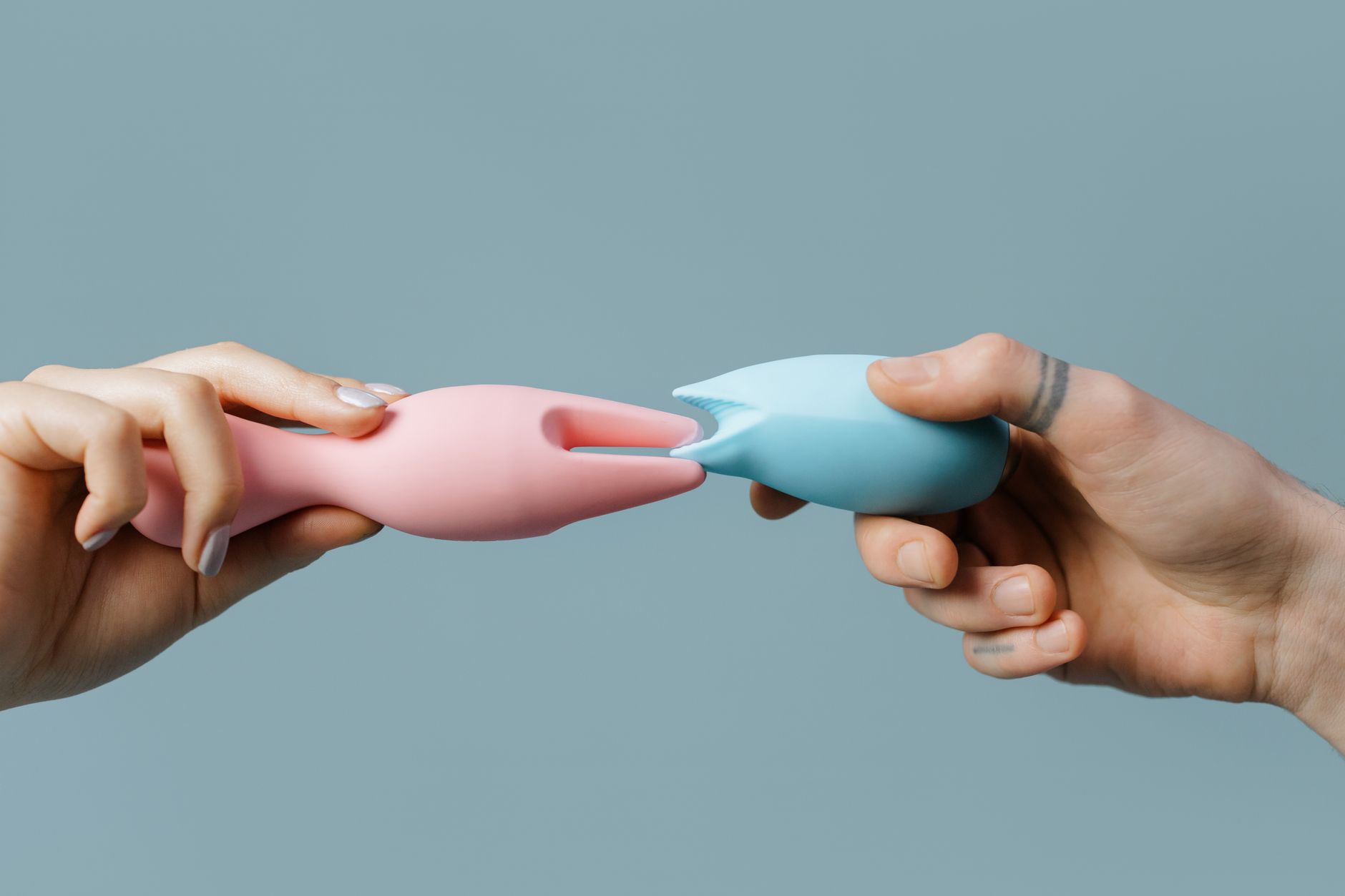
Photo by cottonbro studio on Pexels