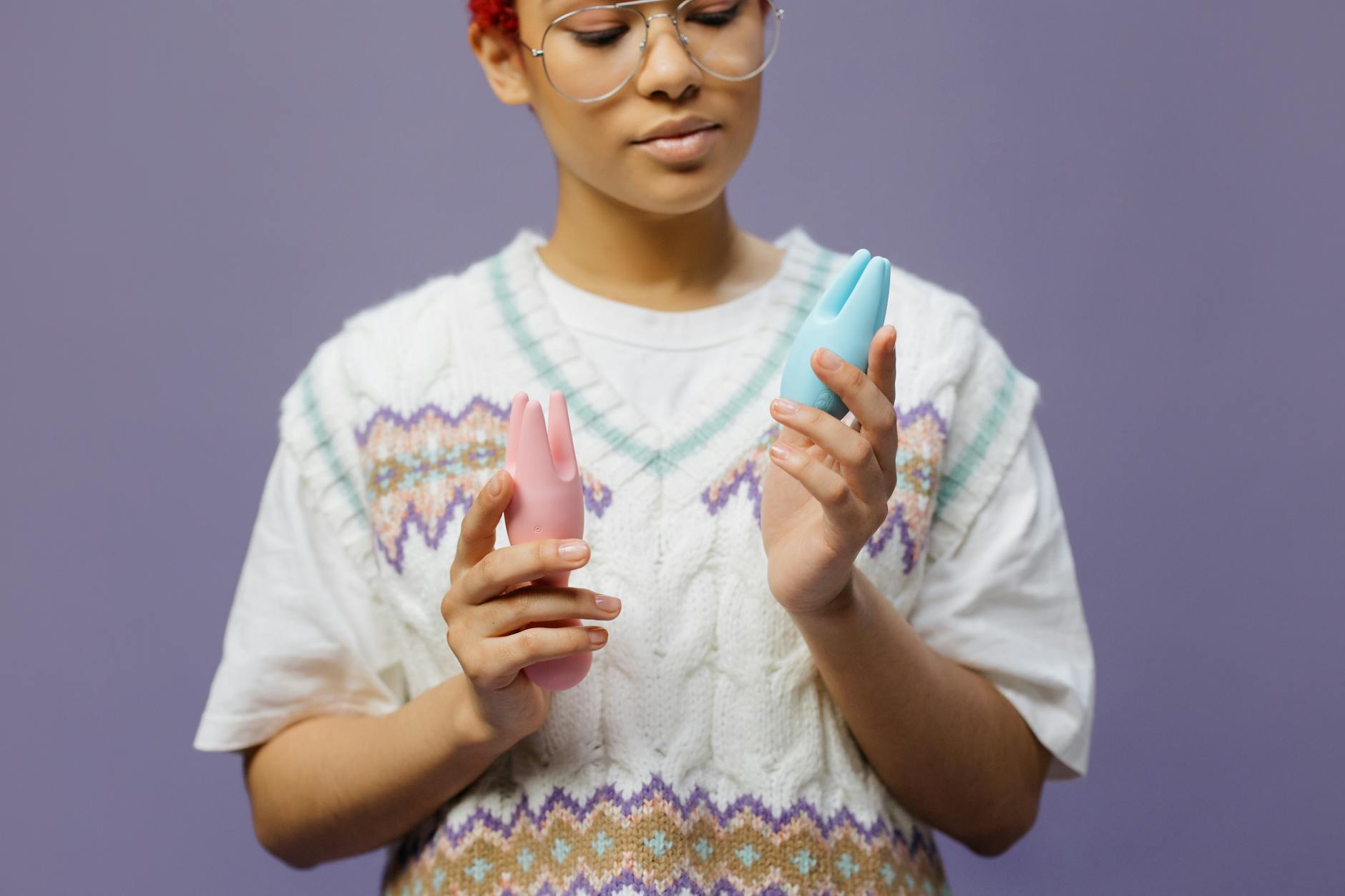
How to Use a Lemon Vibrator After Pregnancy and Postpartum Recovery
Your body has been through something massive. Here's the truth about reclaiming pleasure safely, when your tissues are ready, and why lemon clitoral vibrators feel so good when you're healing.
Let's be real: nobody talks about getting pleasure back after birth. We talk about perineal tearing, sleep deprivation, hormonal crashes, and relationship strain. Nobody mentions the part where you actually want to feel good again.
Here's the thing. Your body needs time. But that doesn't mean pleasure is off the table. It means you need the right approach, the right timing, and honestly, the right tool. That's where lemon suction vibrators change the equation.
I'm going to say this plainly because it matters: your pelvic floor has been through something. If you had a vaginal delivery, tissues stretched and possibly tore. If you had a caesarean, your abdominal wall and everything it supports are healing from surgery. Either way, your tissues are more sensitive, your hormones are different, and your nervous system is running on fumes.
Estrogen is lower postpartum, especially if you're breastfeeding. This means thinner vaginal tissue, less natural lubrication, and a pelvic floor that can feel tight, weak, or both at the same time. Your sexual response isn't gone. It's just rewired, and it needs different conditions to work.
This is also not forever. Most postpartum tissue sensitivity peaks around weeks 4 to 8 and gradually improves. But that doesn't mean you have to wait six months to feel anything good.
The standard medical guidance is six weeks before penetrative sex. That's not a magic number. It's a baseline for most healing. But clitoral stimulation is different from penetration. Your clitoris didn't tear. It's not healing from surgery.
If you're not bleeding heavily, if you're not in acute pain, and if you've checked in with your GP or midwife about your specific healing, gentle external stimulation is often fine way earlier than six weeks. Some people explore lemon vibrators around week three or four postpartum.
The caveat: if you had a severe tear, an episiotomy, or a complicated caesarean, wait for medical clearance. If something feels wrong, stop. Your body will tell you.
This is the practical part, and it's important. Traditional vibrators use direct mechanical vibration. On sensitive postpartum tissue, that can feel overwhelming, too intense, or even painful. A lemon clitoral vibrator works differently. It uses gentle suction and pulse patterns that stimulate nerve clusters without intense friction.
The benefits are specific to recovery:
1. Gentler on sensitive tissue. Suction is diffuse. It spreads pressure across a wider area instead of concentrating it in one spot. For tissue that's still tender, that's a massive difference.
2. You control the intensity. Most lemon vibrators start on pattern 1 and escalate. You can stay on the lowest setting and build from there. No jarring intensity spikes.
3. Natural lubrication happens differently. With suction stimulation, many people find arousal builds more gradually but more completely. Your body gets the signal without the direct pressure that might feel irritating.
4. Less risk of triggering pelvic floor tension. Intense vibration can make an already-tight postpartum pelvic floor clench further. Suction patterns tend to feel more relaxing and actually help pelvic floor awareness.
Okay, so you've cleared it with your healthcare provider and you're ready to try. Here's how.
Start with zero expectation. Seriously. The goal is not to orgasm. The goal is to reconnect with sensation. You might feel nothing. You might feel weird. You might feel amazing. All of those are normal.
Use water-based lubricant, even though you might not think you need it. Postpartum lubrication is unreliable. Even if you're feeling aroused, using a small amount of quality water-based lubricant makes everything feel better and protects sensitive tissue.
Begin on the lowest setting and spend time there. Don't jump to patterns. Sit with pattern 1 for a few minutes. Feel what's happening. Your nervous system is probably processing a lot right now, and rushing through it defeats the purpose.
Keep sessions short. 5 to 10 minutes is plenty. You're not training. You're reconnecting. Shorter sessions also reduce the risk of irritation on healing tissue.
Notice what your body is telling you. Arousal might feel different. Orgasms might feel different. That's not a problem. It's data. Your postpartum nervous system is sending you information. Listen to it.
Here's what I see in my practice constantly: women feel guilty about wanting pleasure while they're supposed to be grateful, exhausted, and focused entirely on their baby. They think desire means they're selfish or unprepared. They feel strange in their own bodies.
That's worth unpacking, but not in the way you might think. Your pleasure is not in competition with your capacity to mother. Wanting to feel good doesn't make you a bad parent. It makes you a human who's been through trauma and is trying to remember that you exist.
If you have a partner, this is a conversation worth having separately from reintroducing sexual activity. "I miss feeling good" is different from "I'm ready to have sex." Confusing them creates expectations and disappointment on both sides.
There are genuine reasons to wait, and it's worth naming them. If you're experiencing postpartum depression or anxiety, adding stimulation to an already-overwhelmed nervous system can backfire. Talk to your GP first.
If you're exclusively pumping or breastfeeding and your prolactin levels are elevated, arousal itself might feel harder. That's hormonal, not emotional, and it usually shifts once you're further postpartum or when you adjust feeding schedules.
If you're in significant pain during or after exploration, that's your signal to stop and check in with a pelvic floor physiotherapist. Pain is information, not something to push through.
Most postpartum people go through a phase where things start to feel good around weeks 8 to 12. Your tissues are healing. Estrogen is starting to stabilize. You might be getting slightly more sleep. Pleasure gets easier.
This is when you can start exploring different patterns on your lemon vibrator. You can try it with a partner if that feels right. You can get curious about what your postpartum body actually enjoys, which might be different from what your pre-pregnancy body did.
Yes. Nothing you do externally on your clitoris affects milk supply or breastfeeding. The concern some people have is about hormone levels, but prolactin from stimulation is normal and doesn't disrupt nursing. If you're worried, check in with a lactation consultant, but there's no medical barrier here.
If you're using suction gently on the lowest setting, no. In fact, many postpartum people find that reconnecting with clitoral sensation helps pelvic floor awareness. If you push intensity too hard too fast, yes, you could irritate things. Start low, go slow, and listen to your body.
You can explore clitoral stimulation once you're past acute post-surgical pain, which is usually around week three or four. Your incision doesn't need to be completely healed. Just make sure you're past the initial inflammatory phase and check with your surgeon if you're unsure.
Completely normal. Your nervous system is recalibrating. Your hormones are different. You're probably exhausted. Feeling nothing is not a failure. It's just where your body is right now. Keep checking back in without pressure.
Yes, absolutely. Some couples find that using a lemon suction vibrator together during foreplay helps rebuild intimacy without the expectation of penetration. Your partner can hold it, explore different patterns, check in with you about sensation. That can feel good for both of you.
Most healers recommend waiting until at least 6 weeks postpartum and until you've had clearance from your healthcare provider. If you've been gently exploring clitoral stimulation with a lemon vibrator and that feels fine, penetration might be next. But that's different from clitoral play. Go slow, use lots of lubricant, and communicate with your partner about what you're ready for.
Postpartum recovery is not a race. You're not supposed to bounce back. You're supposed to slowly, gently reclaim your body and figure out what feels good now. A lemon vibrator can be part of that. It can help you reconnect without pressure, without intense sensation you're not ready for, and without feeling like you have to perform.
Your pleasure matters. Not just eventually, but now. In week four or week eight, whenever your body is ready. You deserve to feel good. That's not selfish. That's taking care of yourself so you can actually be present for everything else.
If you have questions about your specific situation, reach out to your healthcare provider or a pelvic floor physiotherapist. And if you want to explore this conversation more deeply, we're always here to talk.