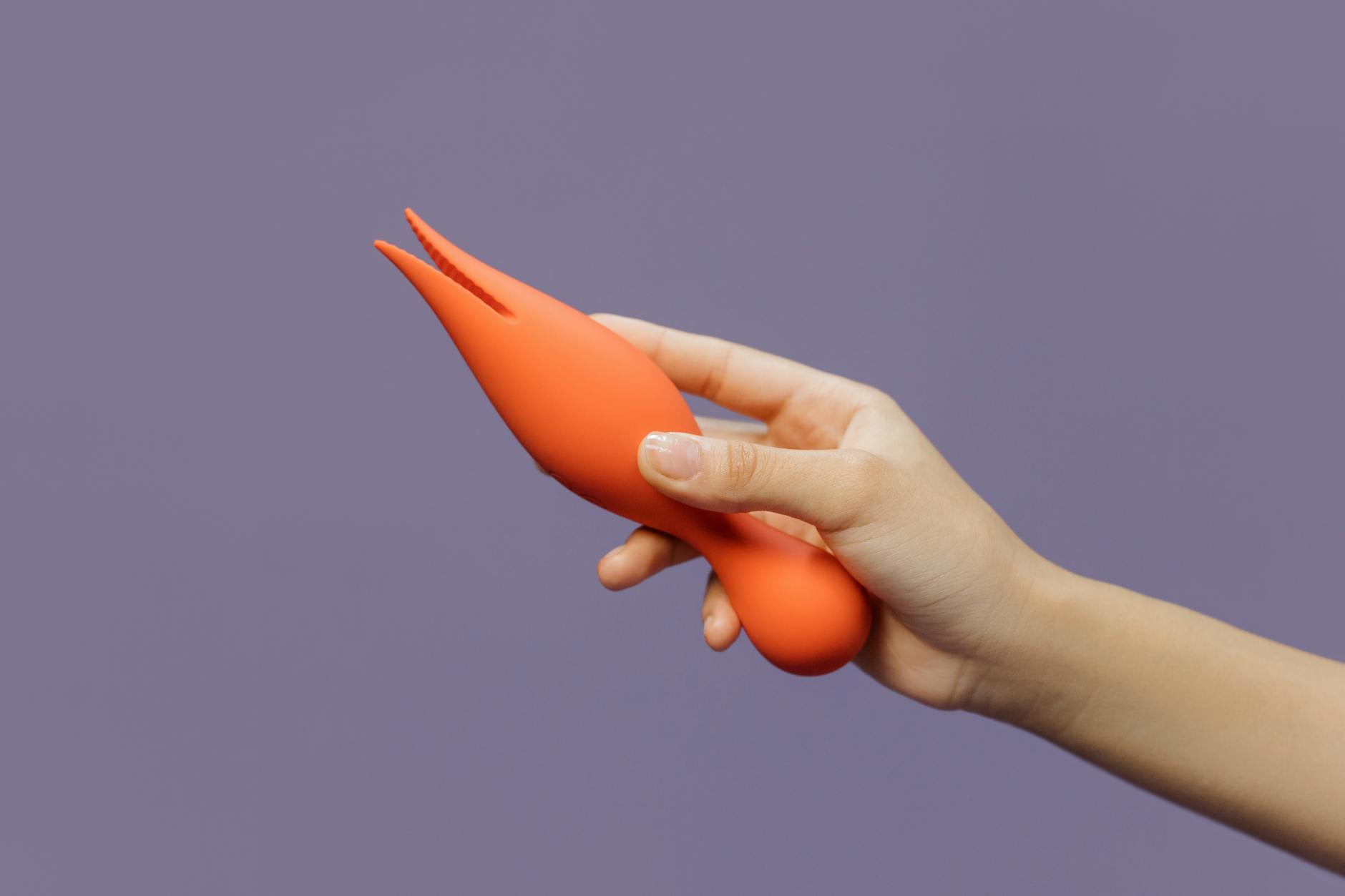
Here's what dissociation actually does to pleasure
Let's be real. Dissociation is your nervous system's way of saying "I need a break from this." It's not a character flaw. It's a survival mechanism that kicks in during stress, trauma, grief, or prolonged overwhelm. The problem is that when dissociation lingers, it doesn't just numb pain. It numbs everything, including the signals your body sends about pleasure, touch, and desire.
You might describe it as feeling like you're watching yourself from outside your body. Or like your skin is a barrier you can't quite cross. Or simply like nothing feels like anything anymore.
The good news: reconnection is possible. And a lemon clitoral vibrator is one of the most effective tools I recommend for rebuilding that bridge.
Why a lemon vibrator works differently when you're numb
Dissociation creates distance between your nervous system and sensation. Traditional vibrators often rely on high-frequency buzz that your numb nervous system might not register at all. You end up chasing intensity and feeling nothing, which deepens the disconnect.
Lemon vibrators (like the Lem) use air-suction technology. This creates a different kind of stimulation. Instead of vibration traveling through layers of tissue, suction pulls blood to the area, stimulates the clitoral bulb directly, and creates a chain reaction of arousal that bypasses the "I'm too numb to feel this" loop.
The rhythm also matters. Because suction pulses in waves rather than constant buzz, it gives your nervous system distinct moments of pressure and release. That rhythm is easier for a dissociated body to recognize and respond to.
Building a grounding ritual before pleasure
Disconnection doesn't live in the vibrator. It lives in your nervous system. So the most important part happens before you touch yourself.
Here's what I ask clients to do:
Five minutes of body awareness first. Close your eyes and notice where you physically are. Feel your back against the chair. Your feet on the floor. The air on your skin. Name five things you can feel right now, without judgment. Not "good" or "bad." Just present.
Then, temperature and texture. Hold ice for a few seconds. Touch something soft (a blanket, your own forearm). Splash cold water on your face if you're floating. These interrupt dissociation faster than anything else because cold and texture are unmissable signals to your brain: "You're here. You're alive."
Finally, breath work. Three slow exhales. In for four, out for six. This tells your nervous system it's safe enough to feel. Dissociation often happens because some part of you believes you need to stay numb to survive. Slow exhales tell that part: "We're safe now."
Only then reach for the lemon vibrator.
Starting with the lowest settings
When you're dissociated, your impulse is often to chase intensity. More, faster, stronger. That almost always backfires because it reinforces the numbness.
Start at pattern one on the Lem. Yes, pattern one. The gentlest pulse.
Let it sit there for 10 to 15 seconds without moving it. Notice what happens. Your body might register warmth, or slight pressure, or absolutely nothing. All of that is fine. You're building a conversation with sensation again, and you're not in a rush.
Then move to pattern two. Pause again. Notice.
The goal is not orgasm. The goal is reconnection. Some people need to do this for three or four sessions before they feel anything at all. That's not a failure. That's your nervous system cautiously learning it's safe to wake up.
Anchor sensation with specific pressure points
When dissociation is active, the clitoris itself sometimes feels distant. Try this instead:
Use the Lem on the outer labia first. Or on the inner thigh, about halfway between your knee and your hip. These areas often have more accessible sensation because they're less "charged" than the clitoris.
Spend three to five minutes there. Let your body register that it's being touched. That it matters. That you matter.
Then, gradually move closer to the clitoris. You're not rushing to orgasm. You're mapping your own body back into consciousness.
Many people find that this slower approach actually gets them there faster, because they're not fighting against numbness anymore.
Managing the "too much" and "too little" trap
Dissociation often flips between two states: everything is too intense (and you tense up to protect yourself) or everything is too muted (and you feel nothing).
If you hit the "too intense" feeling, pause. Breathe. You're not broken. Your nervous system is saying "slow down." Lower the pattern. Or switch to touch without the vibrator.
If you hit "too muted," resist the urge to jump to the highest setting. Instead, change location. Try a different area. Or add temperature. Touch the Lem to warm water first, then to your skin. That contrast helps.
The lemon clitoral vibrator gives you more control over rhythm and intensity than traditional vibrators, which is why it's so useful for this specific work.
When to combine it with other reconnection tools
A lemon vibrator is powerful. It's not a magic fix for dissociation.
If dissociation is recent or severe, talk to a therapist who understands trauma or somatic work. Grounding, pendulation, and vagal toning often work better in combination. The vibrator is a tool within a larger toolkit.
If it's milder numbness (stress, depression, overwhelm without a trauma history), a lemon vibrator alone often does the job beautifully, paired with the grounding practices I mentioned earlier.
If you're on medication that dampens sensation, check with your prescriber. Some antidepressants and antipsychotics flatten arousal. That's a conversation worth having. A lemon vibrator might help you feel more, but it won't solve medication-related numbing on its own.
The small signals that reconnection is working
Don't wait for an orgasm to know it's working. Reconnection is usually quieter than that.
You might notice you felt your heartbeat speed up. Or you had a moment where you forgot you were numb. Or you got wet. Or you wanted to touch yourself again the next day. Or you had a single moment where sensation felt real instead of like an idea about sensation.
Those are wins. Those are your nervous system waking up.
Orgasm might come later. It might come slowly. It might come in a different shape than it used to. All of that is fine. The goal is embodiment, not performance.
When to keep going and when to step back
If reconnection is happening (even slowly), keep the same ritual. Three to five minutes of grounding, then ten to fifteen minutes with the lemon vibrator at low patterns. Consistency matters more than duration.
If you're using it twice a week and noticing tiny shifts in sensation, that's the sweet spot. More often can sometimes override the gentle, patient work your nervous system is doing.
If you've done this for two weeks and nothing has shifted, that's a sign that dissociation might need a different tool. Talk to a therapist. Or try adding a different element: journaling before pleasure, partnered touch alongside solo touch, or even taking a break and coming back to it in a month.
Disconnection isn't permanent. Bodies remember how to feel. A lemon vibrator is one of the kindest ways I know to help yours remember.
People also ask
Can dissociation prevent orgasm permanently?
No. Dissociation is a response, not a verdict on your body's capacity. When your nervous system feels safe enough, sensation and arousal come back. That might take weeks or months, depending on what caused the dissociation. But embodiment is learnable. A lemon vibrator helps because it's gentle and rhythmic enough to teach your nervous system that pleasure is possible again without forcing it.
Should I use a lemon vibrator if I'm also in trauma therapy?
Maybe. Check with your therapist. Some somatic therapists actually recommend gentle, grounded self-touch as part of recovery. Others ask clients to wait until dissociation has reduced. A lemon clitoral vibrator is gentler than many other options precisely because it doesn't override your nervous system. But timing matters. Trust your therapist's guidance on your specific situation.
What's the difference between numbness from dissociation and numbness from depression?
They feel similar, but they're slightly different. Dissociation is distance between mind and body. Depression is more like your whole system is running at half-speed. A lemon vibrator can help both, but they might need different warm-ups. For dissociation, focus on grounding first. For depression, focus on gentleness and lowered expectations. Don't shame yourself for feeling nothing. Start small and patient.
How long before a lemon vibrator actually works for reconnection?
There's no standard timeline. Some people feel a shift in the first session (a warmth, a wake-up). Others need three to five sessions before sensation registers. A few need two weeks of consistent, patient use. The speed isn't a measure of recovery. It's just how your particular nervous system returns to trust. If you're not noticing anything by week three, add a therapist's guidance to the mix.
Can I use a lemon vibrator if dissociation is triggered by touch itself?
Yes, but differently. If touch triggers more dissociation, start without physical contact. Use the lemon vibrator on its own body first (press it into your palm, feel the suction). Then, when you're ready, move it to skin for just five seconds. Pause. Come back to grounding. This might sound slow, but it's actually the fastest way to teach your body that touch doesn't have to mean danger.
Is a lemon vibrator better than other toys for dissociation?
For most people, yes. The suction rhythm is gentler than buzzing, which matters when your nervous system is already overwhelmed. Air-suction technology also creates distinct sensations (pressure and release) that dissociation can't ignore as easily. That said, the best toy is the one you feel safe using. If you trust a different toy more, start there. Safety in your own mind matters more than any single device.
The path back to feeling
Disconnection feels permanent until suddenly it doesn't. Your body didn't forget how to feel pleasure. It just learned to protect itself by going numb. A lemon vibrator, paired with patience and grounding, helps your nervous system remember that it's safe to come back.
If you're feeling lost in your own body right now, know that reconnection is possible. It won't look like it used to. It'll probably look slower, quieter, and more intentional. And that's actually better. That's you choosing your own pleasure on your own terms.
The journey back to embodiment starts small. It starts with noticing. It starts with permission. And if you want support navigating that process, reach out. You don't have to do this alone.