Let's be real. The moment your partner enters the room with intention, your body has other plans. Your breath gets shallow. Your mind starts narrating what's supposed to happen next. And somewhere between the pressure to perform and the voice in your head keeping score, arousal just evaporates.
This isn't dysfunction. This is textbook performance anxiety, and it's wildly common. I've worked with hundreds of couples where one partner can reach orgasm solo without friction but completely flatlines the second their partner is present. The gap between what your body can do alone and what it does with an audience is real, measurable, and fixable.
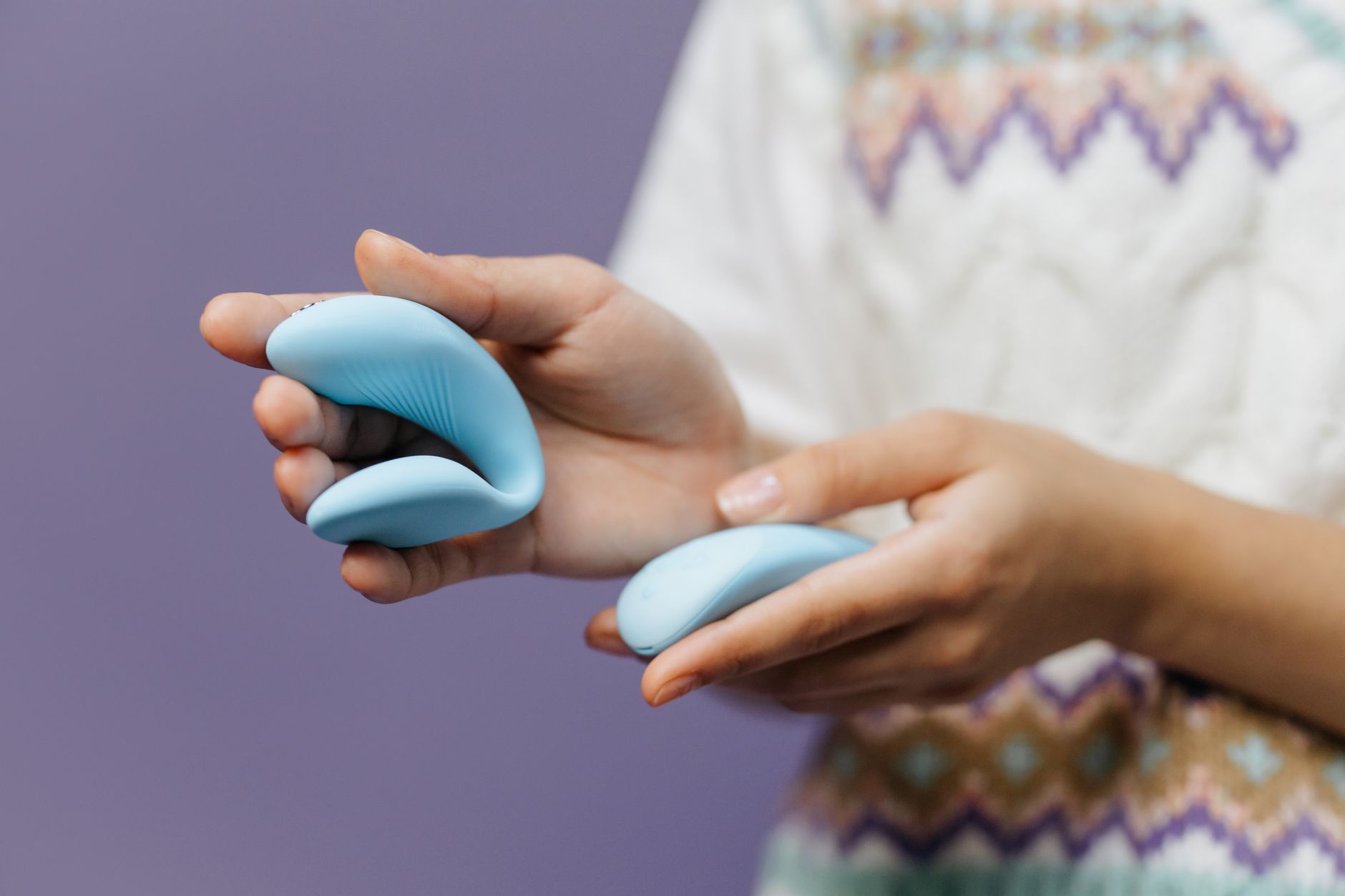
The lemon vibrator (also called a lemon sucker or clitoral vibrator) changes this dynamic in a specific way. It's not just a tool for sensation. It's a permission structure. Here's how to use one to untangle the performance knot.
Why your body goes silent when someone's watching
Your nervous system has a job: keep you safe. When someone's attention is on you sexually, your nervous system reads that as exposure. Not danger exactly, but a kind of vulnerability that triggers a protective response. Your body tightens. Blood flow redirects away from the genitals and toward your muscles (classic fight-or-flight). Arousal needs the opposite environment.
There's also the attention paradox. During solo play, your mind is fully absorbed in sensation. You're not thinking about what you look like, whether you're taking too long, whether your partner is bored, or whether you're doing this "right." The moment your partner is there, that mental bandwidth diverts to monitoring their reaction instead of experiencing your own.
Add in cultural narratives about how orgasms should happen (spontaneously, quickly, during penetration) and you've got a nervous system in lockdown mode.
How lemon clitoral vibrators work differently than other toys
A lemon vibrator uses suction and gentle pulsing rather than direct vibration. That matters here because suction creates a different psychological experience. It feels less like stimulation you have to "keep up with" and more like something that's happening to you. The clitoral vibrator does the work. Your mind can settle.
Second, the sensation is less intense than traditional vibrators. This sounds counterintuitive, but lower intensity actually helps with performance anxiety. A toy that's too strong can make you hyper-aware of every moment you're not on the edge of orgasm. A lem vibrator's gentle suction feels more exploratory. Less pressure. Less score-keeping.
Third, because the lemon sexual toy is compact and hands-free at lower intensities, it removes a layer of self-consciousness. You're not gripping something. You're not visibly "trying." It's just there, working quietly. That invisibility matters when your partner is present.
The bridge strategy: using a lemon sucker with your partner in the room
Start with your partner completely outside the immediate space. You're in the bedroom, they're in another room. Use your lemon clitoral vibrator solo until you reach orgasm. Do this 3-4 times over a few days. The goal isn't novelty. It's neurological consistency. Your body learns: lemon sucker equals orgasm happens.
Then gradually shift the proximity. Your partner reads in the same room but facing away. Then they're beside you but not watching directly. Then they're watching your face but not your body. Each step, you're using the lemon vibrator and reaching orgasm. Your nervous system is slowly updating the file from "partner present equals shutdown" to "partner present equals pleasure still works."
Once you've hit orgasm several times with your partner present (even passively), you introduce partner touch. They might caress your body while you use the clitoral vibrator. Or they might just hold you. The lemon sucker is still doing the genital work. They're doing the proximity and touch work. These are separate systems, and keeping them separate prevents the nervous system from spiking back into protection mode.
Managing the mental loop while using the toy
Your brain will try to narrate. "Is this taking too long?" "Does my partner think I'm weird?" "Am I doing this right?" The moment you notice the commentary, name it: "That's the anxiety talking." Don't fight it. Just label it and return attention to sensation.
Specifically, return attention to three things: the physical feeling of the lemon vibrator, your breath, and whatever sensation you notice in your body that isn't performance-related. Maybe it's the pressure in your lower belly or the warmth spreading across your skin. These somatic anchors keep your mind in your body instead of in the audience eye.
If you're using the lemon clitoral vibrator with your partner present, give them a job that isn't watching for results. They could run their hands over your arms or legs. They could narrate what they're noticing about your pleasure ("Your breathing just changed." "I can see your shoulders relax.") without waiting for a response. This redirects their attention from "when will you come" to "what's happening right now," which changes the pressure you feel.
The orgasm itself will feel different, and that's okay
When you first use a lemon sexual toy with your partner present, the orgasm might be smaller than when you're completely alone. It might feel more localized or shorter. This doesn't mean it's broken. It means your nervous system is still partly in protection mode. That's normal. The orgasm quality improves over repetitions as your system updates its safety file.
Also, the sensation from a lemon vibrator is genuinely different than from your hand or other toys. Some people describe it as more diffuse. Others say it feels sharper. It takes a few uses to recognize what good feels like with this specific toy. Give yourself that adjustment period before deciding if it's working.
When to involve your partner in the conversation
Don't wait until you're in the moment. Tell your partner before any session what you're working toward and why. "My nervous system shuts down when I feel like I'm being watched for results. I'm going to use the lemon vibrator to reset that pattern. I might ask you to be in the room but not focused on whether I orgasm. That helps me relax." Most partners genuinely want to help and just don't know what helps.
Setting that expectation prevents them from interpreting your silence as rejection or your slower arousal as disinterest. They understand they're part of rebuilding, not the audience for a performance.
When to consider working with a therapist
If you've used a lemon clitoral vibrator solo and reached orgasm easily, but orgasm completely disappears with your partner despite the bridge strategy above, there may be deeper relationship dynamics at play. Sometimes performance anxiety is actually avoidance anxiety. Sometimes it's unresolved conflict about intimacy or control. A therapist who specializes in couples can help untangle that.
Similarly, if you notice that orgasm disappears with all partners, not just this one, that's worth exploring with a professional. It suggests the issue isn't about a specific relationship but about your relationship to being witnessed in pleasure.
FAQ: Performance Anxiety and the Lemon Vibrator
How long does it usually take before orgasm returns with a partner present?
With consistent practice using a lemon sucker (3-4 times weekly), most people see a shift within 2-3 weeks. That doesn't always mean reaching orgasm with a partner right away. It usually means the pathway becomes available again, even if it takes longer or feels slightly different. Patience matters more than speed here.
Can my partner use the lemon vibrator on me, or do I need to use it myself?
You can do both, but start with yourself. When you're operating the toy, you control the pressure, rhythm, and intensity. That control is part of what helps your nervous system relax. Once you've hit orgasm solo with it a few times, your partner can hold it if you want. But make the solo phase non-negotiable first.
Does using a clitoral vibrator make it harder to orgasm without one?
No. Lemon vibrators work with your body's natural response, not against it. Some people do become accustomed to the specific sensation and prefer it, which is fine. If you want to maintain orgasm flexibility, alternate between the lemon sucker and other forms of stimulation.
What if the lemon sexual toy helps me orgasm solo but I still freeze up with my partner?
That means the performance anxiety is partner-specific, not toy-specific. Go slower on the proximity bridge. Spend more time with your partner in the room while you use the toy before introducing their touch. And have an honest conversation about what specifically makes you nervous about being watched by them.
Should I tell my partner I'm having trouble reaching orgasm with them, or just start using the toy?
Tell them. Attempting to fix this in secret usually backfires because they'll notice something has changed and might misinterpret it. Transparency about what you're working on and why usually deepens intimacy, not the opposite.
Can a lemon vibrator help if I have a vulva but my partner has a penis?
Absolutely. In fact, this scenario is super common. The lemon clitoral vibrator gives you direct clitoral stimulation while your partner is involved in other ways. Many couples find this changes the dynamic entirely because the pressure to orgasm from penetration alone evaporates. The toy handles clitoral pleasure. Your partner handles proximity and connection. Everyone relaxes.
The real issue is safety, not sensation
Performance anxiety isn't about your body. It's about your nervous system deciding that being watched in pleasure isn't safe. A lemon vibrator doesn't fix the nervous system directly. What it does is create conditions where pleasure becomes available again, which gradually teaches your system that being seen is actually okay.
The toy is the bridge. The real work is your willingness to show your partner your pleasure, slowly, at your own pace, in conditions you control. That's harder than just adding a vibrator to the mix. But it's also what actually shifts the dynamic.
If you're ready to explore how lemon vibrators or other clitoral vibrators can help, start solo. Let your body remember what pleasure feels like without an audience. Then gradually expand. Your partner doesn't need to watch you break down walls. They just need to understand why you're rebuilding them, and be patient while you do.