
Here's the tension nobody talks about
One partner touches a vibrator for three seconds and says "that's way too much." The other one says "I barely feel anything." You're both right. You're also both stuck in the same body during sex, which creates this awkward standoff: do we use something that feels good for one person but kind of painful for the other?
Mismatched sensitivity is genuinely common and wildly underrated as a source of tension in couples. It's not about desire. It's not about connection. It's literally that your nervous systems are wired differently, and no amount of communication fixes that. What does fix it is choosing the right tool.
Why mismatched sensitivity happens (and it's not a relationship problem)
Sensitivity isn't a personal preference. It's partly neurological. Some people have higher nerve density in their clitoris. Some have lower pain thresholds. Medications, hormones, stress levels, and past experiences all shift the baseline.
Here's the thing I tell couples in my practice: if you're spending energy arguing about what intensity "should" feel good, you've already lost. The argument is unwinnable because it's not about intensity at all. It's about wiring you didn't choose and can't consciously change.
A lemon clitoral vibrator solves this because of how it works mechanically. Unlike traditional vibrators that transmit pure vibration across a flat surface, the lemon uses suction and pulsing through a softer opening. This means the same toy, on the same setting, genuinely feels like a different intensity depending on how it's used.
The mechanical advantage of lemon suction toys
With a traditional vibrator, intensity is pretty binary: you get the vibration it gives you. Stronger toys buzz harder. End of story.
A lemon vibrator's suction mechanism means you control the intensity through positioning and pressure, not just the button. This is huge for mismatched partners.
If one partner needs gentler sensation: they can hold the lemon lightly against the clitoris, get the pulsing without the full suction pressure, and dial intensity up gradually. The softer silicone opening means less direct friction.
If the other partner craves stronger sensation: they can increase pressure, angle it differently, or use a higher pulse pattern. The same device gives them what they need without needing a second toy.
This flexibility is why I recommend a lemon sucker over multiple vibrators for couples with sensitivity gaps. You're not switching between devices mid-session. You're using one tool that actually adapts.
How to actually introduce it if sensitivity has been an issue
Don't frame it as "we need this because you're too sensitive" or "we need this because you need more stimulation." That lands like criticism.
Instead, approach it practically: "I found something that lets us both get what we need without one of us compromising. Want to try it together?"
Start with the lowest pulse setting. Have the more sensitive partner go first, hold the lemon lightly, and explore. Then hand it to the other partner. Let them find their own pressure point. Most couples discover within five minutes that they can actually both use the same device comfortably because the intensity is adjustable through technique, not just buttons.
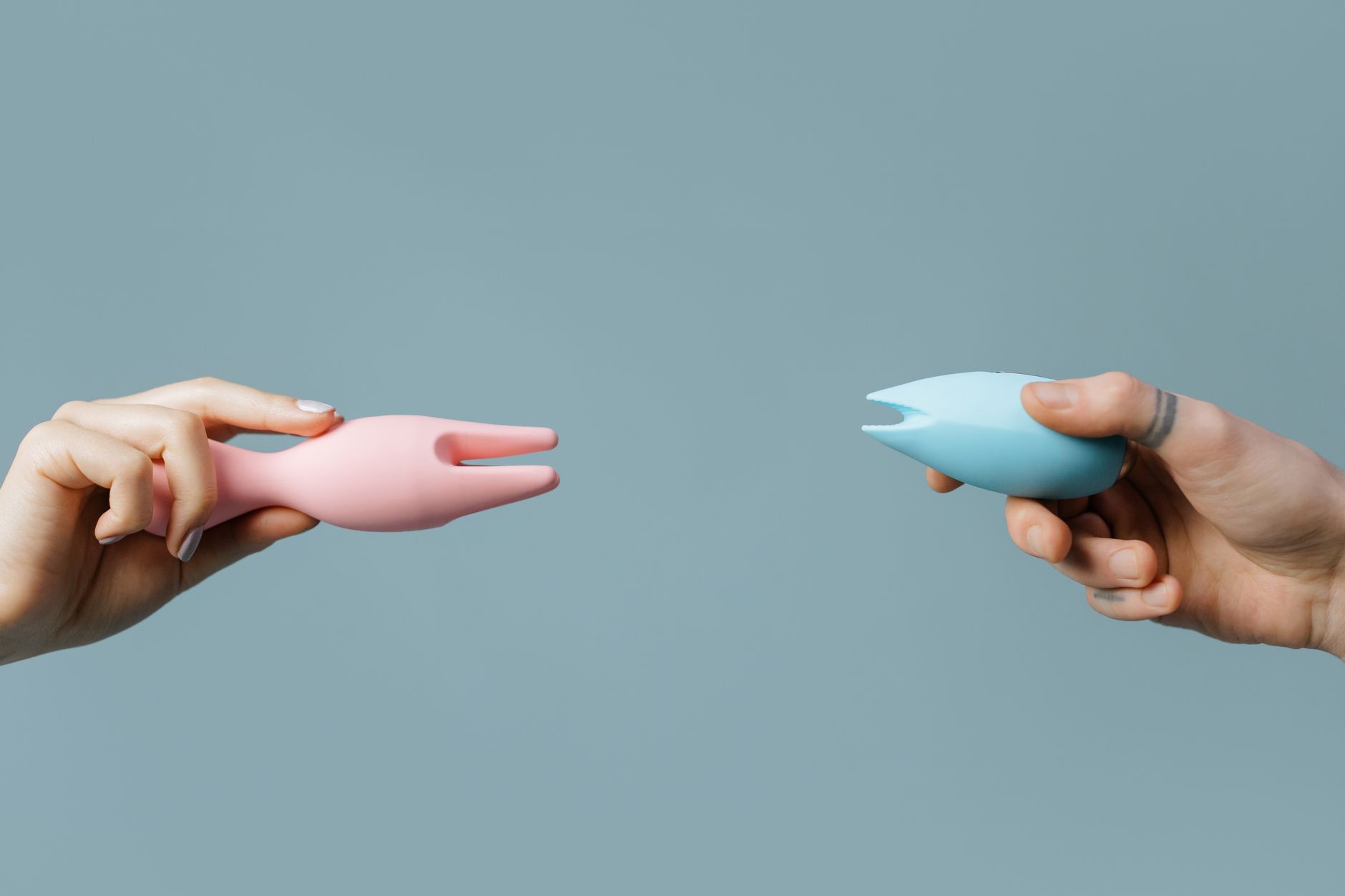 Photo by cottonbro studio on Pexels
Where it breaks down (and what to do instead)
If one partner finds even the lowest setting unbearable, a lemon vibrator won't magically fix it. That might signal something else: nerve sensitivity from a medical condition, trauma responses, or anxiety. In that case, shifting to a broader conversation with a therapist or sex-informed medical provider makes sense before trying new toys.
Similarly, if the other partner tries the highest setting and still feels like it's not enough, they're not broken either. They might have neurological differences that benefit from toys designed specifically for stronger stimulation, or they might be getting something different from the experience than sensation alone.
The point: a lemon clitoral vibrator solves mismatched sensitivity when it's purely about intensity preference. It's not a workaround for pain, numbness, or deeper pleasure disconnects.
Building a shared language around sensation
Once you're both using the same tool, you can actually talk about what you're feeling without defending it. "This pressure feels good to me" isn't asking the other person to change. It's just data.
I've seen couples move toward genuine collaboration once they stop negotiating intensity. They can say "try the second pulse pattern" or "hold it at an angle" without it feeling like criticism of the other person's body.
That shared language is worth way more than the vibrator itself. You're learning to solve problems together instead of trying to make your bodies match.
The solo benefit (one you might not expect)
Here's a bonus: partners with high sensitivity sometimes avoid vibrators entirely because they feel intimidated by intensity. Once they use a lemon with their partner and discover they can control the experience through pressure and positioning, they often want to explore solo too.
Low sensitivity partners might discover that a lemon sucker works better for them than what they've been using, even alone. Same tool, new understanding of how to use it.
Practical setup tips for couples play
If you're using a lemon clitoral vibrator during partnered sex:
One partner can hold and direct it while the other focuses on other forms of touch. This divides the attention load and lets you both stay present.
Or one partner can use it on themselves while the other engages in penetration or manual touch. Some couples find this version lets them sync their rhythm in a way that traditional partnered vibrator use doesn't.
Water-based lubricant helps with glide if you're moving the lemon between partners or using it for extended periods. The softer silicone stays comfortable longer with lube.
Start with a pattern in the middle of the range, not the lowest or highest. You can always adjust in either direction from there.
What this actually solves in a relationship
I worked with a couple once where the sensitivity gap had become this thing they couldn't discuss without defensiveness creeping in. He felt rejected because she found intense stimulation painful. She felt pressured because he felt rejected. Neither feeling was actually about the other person.
Once they found a tool that let them both feel genuinely good at the same time, something shifted. It wasn't the vibrator that fixed the relationship. It was the relief of not having to choose between their own needs and their partner's.
That's what mismatched sensitivity often is underneath: not a problem with bodies, but a problem with scarcity. Like there's only one version of pleasure available and one of you has to sacrifice.
A lemon vibrator, by being mechanically flexible, removes that false scarcity. You can both have what you need. That matters more than it might sound.
FAQ
Does a lemon vibrator work the same way for both partners if they have very different sensitivity?
Yes, because the intensity you experience depends on how you use it, not just what the vibrator does. A gentle hold against the clitoris feels completely different than applying full pressure, even on the same pulse pattern. The more sensitive partner typically prefers lighter contact and lower patterns. The partner who craves stronger sensation can use more pressure and higher patterns. Same tool, genuinely different experiences.
Should we take turns using it, or can we use it simultaneously?
Both work, depending on your setup and preference. Some couples prefer taking turns so each person gets full attention. Others use it during penetrative sex where one partner holds it on the receiving partner's clitoris. There's no correct way. Start with whatever feels least awkward and adjust from there.
What if one partner still feels left out when the other is using the lemon vibrator?
This usually means you need a conversation about what "left out" actually means. Are they missing the stimulation? Missing attention? Missing the sense of contributing? Those need different solutions. If it's about desire to also receive direct clitoral stimulation, most couples find that alternating works. If it's about feeling excluded from the experience, that's often about building connection in other ways during sex, not about the vibrator.
Can we use a lemon vibrator for foreplay if we have mismatched sensitivity, or does it need to be during the main event?
Foreplay is often where mismatched sensitivity shows up most clearly because there's less other stimulation happening. Using a lemon vibrator during foreplay can actually help because you're both learning what intensity works before you move into partnered sex. Lots of couples find it's the perfect warm-up tool.
Is a lemon clitoral vibrator better for couples than a traditional vibrator when sensitivity is mismatched?
Yes, because the suction mechanism and softer silicone opening give you control through technique, not just buttons. A traditional vibrator is pretty much what it is at any given setting. A lemon lets you modulate intensity significantly just by how you position it and apply pressure. That flexibility is exactly what mismatched sensitivity couples need.
What if we've tried a toy and it made the sensitivity gap worse, not better?
That usually means the toy didn't have the right flexibility for your particular gap. The sensitive partner might have found it too intense even on the lowest setting. The other partner might have needed something specifically designed for stronger sensation. You're not incompatible. You just needed a different approach. That's worth exploring with someone who can talk through what each of you actually felt.
The bigger picture
Mismatched sensitivity in couples isn't a design flaw in your relationship. It's just how bodies work. Some people's nervous systems are wired to experience intense sensation as uncomfortable. Others experience gentle sensation as barely there.
The couples who figure this out tend to stop seeing it as a problem to fix and start seeing it as information to work with. A lemon vibrator is one tool that makes that shift easier because it genuinely allows both partners to feel good without negotiation.
That's not nothing. When you're both experiencing pleasure at the same time, during the same activity, without one person accommodating the other, something clicks back into place in the relationship. It's not magic. It's just what happens when you solve the wrong problem and finally get to work on the right one.
If sensitivity gaps are creating friction in your partnership, you don't need more communication techniques. You need the right tool. And sometimes the right tool is just a way to finally stop fighting your bodies and start enjoying them together.