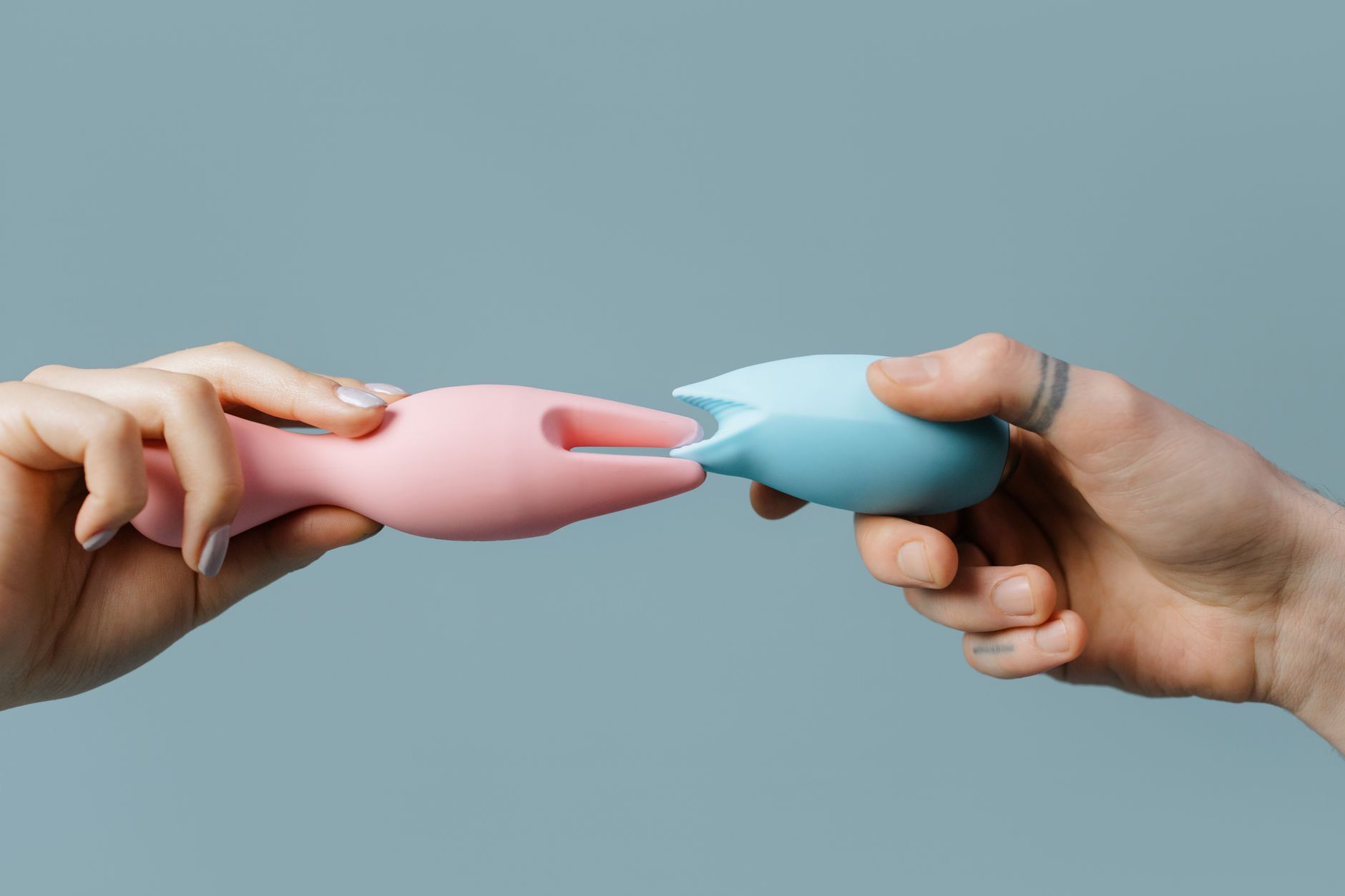
Here's the thing about refractory periods that nobody talks about
One of you finishes, and you're ready to go again. Your partner needs to lie still for twenty minutes. Or maybe it's the reverse. This mismatch doesn't mean anything is wrong. It's biology. But it does create an awkward gap where one person is satisfied and the other is... waiting.
That gap is where resentment lives. Not because anyone did anything wrong, but because it feels like rejection. "Why aren't you interested anymore?" one partner wonders. "I'm overwhelmed, give me a second," the other thinks but doesn't say. And suddenly sex goes from connected to isolating.
The solution isn't better communication alone. It's a tool that lets one partner enjoy more pleasure while the other rests. That's where lemon clitoral vibrators change the equation.
What refractory periods actually are
Refractory period is the downtime after orgasm before someone can have another one. For some people, it's ninety seconds. For others, it's an hour. Age, hormones, nervous system sensitivity, and just plain genetics all factor in. Partners with mismatched refractory periods aren't incompatible. They're just different.
The problem starts when one partner interprets the other's rest time as disinterest. "You don't want me anymore" becomes the story, even though the real story is "my body needs five minutes before it can respond again." Over time, this dynamic can tank desire for both people.
A lemon clitoral vibrator solves this by creating a way for the partner with the shorter refractory period to stay engaged and pleasure their partner while the other rests. It's not about forcing anyone back into arousal. It's about building connection during the recovery phase.
Why lemon vibrators work better for this than traditional toys
Traditional vibrators rely on penetration or friction. They require reciprocal energy from both partners. A lemon suction vibrator like the Lem works differently. It provides targeted stimulation that one partner can enjoy almost passively while the other watches, participates at their own pace, or simply stays present.
Here's the key difference. With a lem vibrator, the partner in recovery doesn't have to perform. They can touch you, kiss you, hold the device, or just be there while you build arousal again. It's foreplay without the pressure to be immediately ready.
The suction technology means the sensation builds gradually. You're not suddenly bombarded with intense vibration. The toy works at its own pace, which matches the natural rhythm of recovery arousal perfectly. This is especially true if you're exploring how lemon vibrators compare to traditional vibrators for beginners.
The setup that actually works
First, normalize the conversation. Before you're in bed together, talk about refractory periods like you'd talk about anything else. "I notice you usually want to rest after you come, and I usually want more. That's not a problem. Here's how we can stay connected." Frame it as logistics, not criticism.
Then, when you're intimate, after the first person reaches orgasm, that's your cue. The recovering partner can shift into a support role. They might hold the lemon vibrator for their partner. They might apply it themselves while their partner watches and touches them. The specifics don't matter as much as the intentionality.
Set a comfortable position before you start. If one partner is resting, they should be able to relax fully without strain. This might mean propping up on pillows or lying on their side. The recovering partner isn't supposed to be contorted. They're supposed to be comfortable enough to stay present and engaged.
What the recovering partner actually does during this time
They don't disappear. They don't check their phone. That's the old pattern that breeds resentment.
Instead, the recovering partner can. Kiss their partner's neck or shoulders while the lemon clitoral vibrator works. Stroke their hair or back. Use their hands on other parts of their partner's body. Talk softly. Make eye contact. Hold their partner's hand.
This sounds simple, but it's profound. The partner in recovery stays connected to the pleasure happening. They're not excluded. They're supporting it. Their nervous system stays engaged even if their arousal system needs a break.
Some partners use this time to focus on giving. "Your pleasure is my pleasure right now." Others use it to rest and be present simultaneously. There's no single correct way, as long as both partners feel connected rather than abandoned.
The timing piece that changes everything
Refractory periods aren't fixed. They depend on stress, sleep, alcohol, medications, and how aroused someone was. A partner who usually needs fifteen minutes might need five after a particularly intense orgasm. Or they might need thirty after a stressful day.
Don't assume the timeline. Check in. "Do you want me to come again, or do you need a minute?" This tiny question does two things. It gives the recovering partner permission to ask for time without shame. It gives the active partner clarity instead of guessing.
If the answer is "give me ten minutes," the lemon vibrator becomes a beautiful bridge. It's not a substitute for your partner's touch. It's what happens while they recover. The Lem works well here because suction-based stimulation doesn't require your partner to be actively engaged. They can rest and be present simultaneously.
When refractory periods are wildly different
Maybe one partner can have multiple orgasms with fifteen seconds between them. The other needs forty-five minutes. That's a bigger gap than most couples face, and the strategy shifts slightly.
The faster partner might come multiple times using the lem vibrator while their slower partner watches, touches them, or simply rests nearby. This works because the lemon clitoral vibrator allows for extended solo use without the pressure of reciprocation.
Alternatively, after the first round, the recovering partner might initiate a completely different type of intimacy. Maybe it's sensual touch without the goal of orgasm. Maybe it's conversation. Maybe it's taking a shower together and coming back to bed. The point is that you're not sitting in awkward silence while one person recovers and the other waits.
When refractory periods are truly mismatched, you might also explore how to use a lemon vibrator when recovery time between orgasms feels too long, which covers even more specific scenarios.
The emotional piece that's actually the most important
Here's what I see in my practice. Couples with different refractory periods often internalize it as incompatibility. "We're just not synced." That story is false. You're not incompatible. You're just different.
Using a tool like a lemon vibrator together reframes this difference. Instead of "we don't match," it becomes "we have a way to stay connected even when our bodies need different things." That shift changes everything about how couples experience these gaps.
The fantasy is that both partners want the same thing at the same time. The reality is that desire, arousal, and recovery are deeply individual. The couples who stay connected across decades aren't the ones who got lucky with timing. They're the ones who built systems and tools that work for their actual bodies.
A lemon suction toy becomes part of that system. It's not a replacement for your partner. It's proof that you can stay intimate even when you're different.
Trying this for the first time
Start small. Don't make it a big production. You don't need a whole conversation beforehand. You could simply bring the lemon vibrator into the bedroom the next time you're intimate, use it together in a low-pressure way, and see what happens.
Many couples find that after one good experience, this becomes natural. The recovering partner begins to look forward to this phase rather than dreading it. The active partner feels less abandoned. Both people feel more creative about intimacy.
If it feels awkward at first, that's normal. Trying something new together is inherently a little awkward. That awkwardness usually dissolves within a few times.
People also ask
Why do people have different refractory periods after orgasm?
Refractory periods vary based on age, hormones, nervous system sensitivity, arousal intensity, stress levels, sleep quality, and medications. There's no "normal." One partner might recover in under a minute while another needs thirty. Both are completely healthy variations. If you're curious about how this might relate to broader sensation challenges, check out how lemon clitoral vibrators improve sensation after years of numbness.
Is it normal to want more sex right after my partner finishes?
Yes. Some people have short refractory periods and experience post-orgasm arousal. They're actually more horny immediately after coming, not less. This is often genetic and doesn't reflect anything about your partner or your relationship. Many people with this pattern just need a tool that lets them stay engaged without requiring their partner to immediately be ready again.
Can a lemon vibrator help if I recover really quickly but my partner takes a long time?
Absolutely. A lem vibrator gives you something pleasurable to do during your partner's recovery time while they stay involved and connected. You're not waiting around feeling frustrated. You're building arousal at your own pace while your partner supports you. It's a way to honor both of your timelines.
Should we use the vibrator instead of having sex together?
No. Use it as part of your intimate time together, not instead of it. The best approach is usually one partner reaches orgasm through partnered sex, then while they recover, you use the lemon clitoral vibrator for more pleasure. Then you can circle back to partnered sex again once recovery is complete. It's a bridge, not a replacement.
What if we're embarrassed to bring this up?
Most couples feel awkward talking about sex at first. Try framing it functionally rather than emotionally. "I've noticed we have different recovery times, and I found a tool that might help us stay connected during that gap." Then show your partner the lemon vibrator. Often, physical objects make these conversations easier than abstract discussion. If talking directly feels too hard right now, you could also explore how to use a lemon vibrator when emotional intimacy affects desire for some context on rebuilding that conversation foundation.
Does using a lemon vibrator during this phase make my partner feel like I'm not interested in them?
It can, if you approach it wrong. The key is to keep your partner central to the experience. Touch them. Make eye contact. Invite them to participate. Talk about it. The vibrator isn't a way to opt out of intimacy. It's a way to keep intimacy alive even when both bodies aren't ready for the same thing at the same moment.
The takeaway
Partners with different refractory periods aren't broken. You're just operating on different timelines. A lemon clitoral vibrator bridges that gap. It lets one partner enjoy more pleasure while the other rests, and it keeps both of you connected instead of isolated.
This is how real couples solve real friction. Not by forcing their bodies into alignment, but by building tools and systems that honor how their bodies actually work. The couples who stay passionate across years aren't the lucky ones with perfect timing. They're the ones creative enough to adapt.