Here's the thing no one talks about
You can orgasm alone. You can orgasm easily. But the moment your partner is in the room, your body decides it's a performance audition instead of a pleasure session. This is not a character flaw. It's a nervous system doing exactly what nervous systems do when they perceive an audience.
The technical name is spectating. You're watching yourself have sex instead of actually having it. And the harder you try to push through, the further away the orgasm gets. Sound familiar? You're not alone. I see this pattern constantly in couples therapy, and the solution is usually not more lube or a different position. It's permission and strategy.
What's actually happening in your body
Your nervous system has two gears: sympathetic (fight-flight-freeze) and parasympathetic (rest-digest-play). Orgasm lives entirely in parasympathetic mode. Arousal can happen in sympathetic, but climax requires deep safety and zero threat detection.
When you're alone, your nervous system knows there's no judgment. No one is watching your face, timing your response, or forming opinions about how long it's taking. Your brain can actually focus on sensation.
With a partner present, even a partner you love deeply, there's an invisible witness. Your nervous system doesn't fully trust that they're not evaluating. So it partially activates your sympathetic nervous system. You're never fully relaxed. The arousal plateau gets stuck instead of tipping into climax.
Add performance pressure ("I want to make my partner happy" or "They're getting bored") and sympathetic activation increases. Your body actually gets harder to satisfy, not easier.
Why a lemon clitoral vibrator changes the dynamic
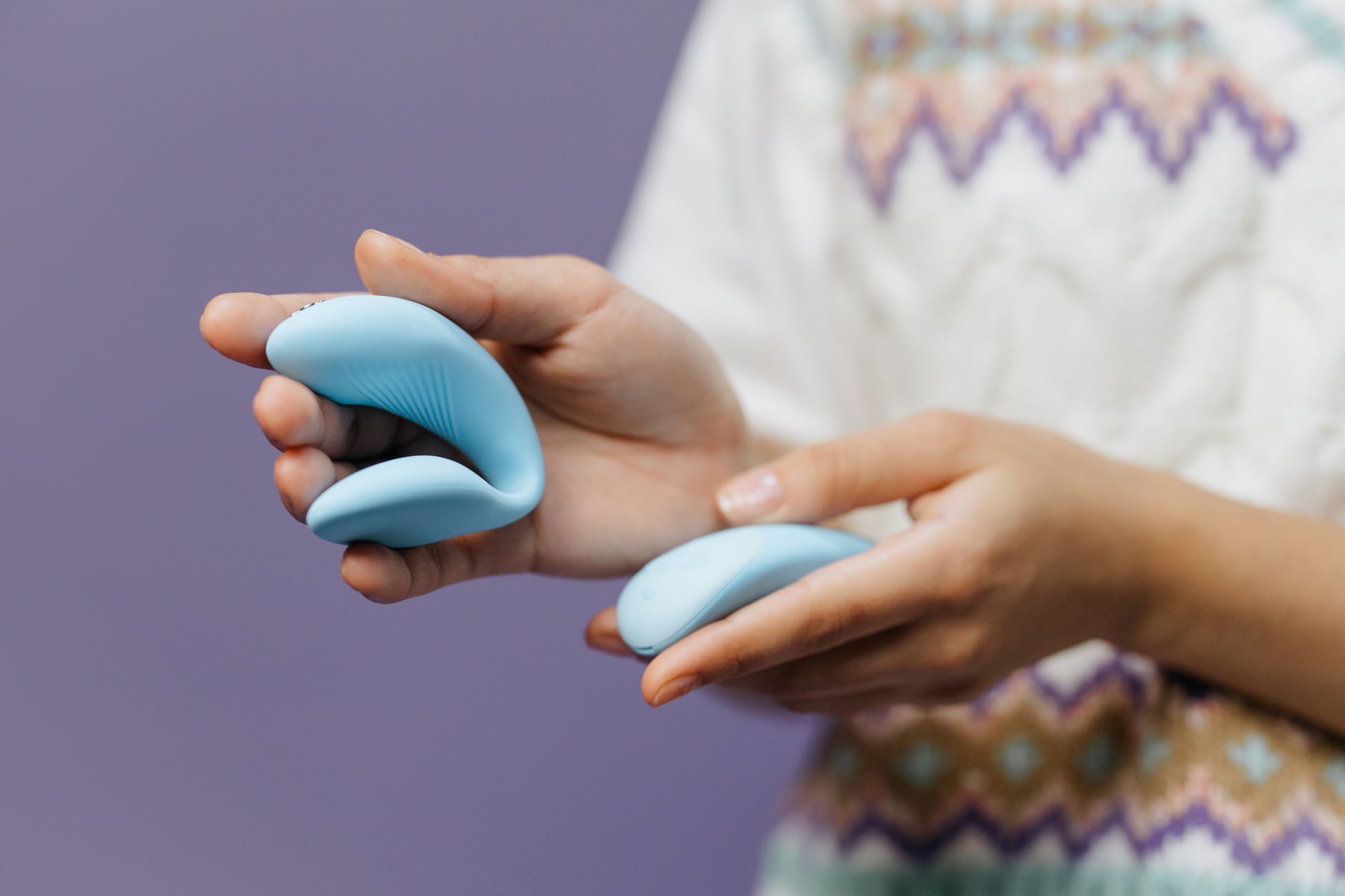
The suction technology in a lemon vibrator works differently than traditional vibrators. Instead of relying on friction or vibration patterns that require mental focus to feel, suction creates a pulling sensation that's less cognitively demanding. Your brain doesn't have to work as hard to feel the stimulation.
This matters because spectating is a thinking activity. You're mentally monitoring yourself. A lemon vibrator's suction mechanism is powerful enough to interrupt that loop and pull your attention back into pure sensation. It's like the vibrator is saying "Stop thinking, start feeling" without needing you to consciously redirect.
There's also a subtle psychological shift. The vibrator becomes the "responsible party" for your pleasure. You're not performing for your partner anymore. You're working with a tool. Your partner becomes a witness to your pleasure rather than the source of pressure. That distinction is everything.
Setting up for success with your partner in the room
First, have the conversation before you're in bed. Tell your partner exactly what's happening: "When I feel watched, my nervous system goes into self-consciousness mode and I can't relax into climax. I want to try using a lemon vibrator to help me get out of my head." Most partners respond with relief because they've noticed you struggling and they want to help.
Second, establish clear roles. Your partner is not trying to make you orgasm with the vibrator. That's not their job anymore. Their job is to be present without demanding specific outcomes. They can touch you, kiss you, talk to you. But the pressure to deliver results needs to completely lift.
Third, start with brightness. Don't dim the lights and pretend this is a shameful secret. Shame and low light trigger more self-consciousness, not less. If anything, softer brightness (not complete darkness) helps some people feel less scrutinized.
The mechanics: how to actually use it
Begin solo first, even for just two or three sessions. You need to know what the lemon vibrator feels like and what settings work for you. Most people start at lower patterns and work upward. The suction sensation is different from vibration, so your body needs a minute to recalibrate what feels good.
When your partner is present, hand them the Lem once you're already aroused. You don't want to introduce the vibrator at the very beginning. Let foreplay warm you up for 15-20 minutes first. Your nervous system will be lower on alert by then.
Once you're using it with them nearby, the key is permission to go at your own pace. This is not a timed event. Some nights you'll orgasm in five minutes. Other nights it takes twenty. Both are fine. The moment you start thinking "I should be closer by now," you're back in performance mode. Catch that thought and let it pass.
If it helps, close your eyes. If you need your partner to stop moving or talking, tell them. You're directing this. Your pleasure is not about entertaining anyone else.
The conversation with your partner about what they need
Here's where it gets real. Some partners feel inadequate when a vibrator enters the picture. They might think "If they need a vibrator, I'm not enough." This is a valid feeling, but it's also not based in biology. A lemon vibrator doesn't replace your partner. It removes a barrier that was preventing you from fully experiencing pleasure with them.
Use this language: "This helps me relax instead of perform. When I'm relaxed, I can actually be more present with you." That's true. Spectating creates distance. Genuine orgasm creates connection.
Some partners will want to hold the vibrator or control the intensity. That's fine if you want that. But you get to say no if you need to stay in control. There's no single right way to do this.
One more thing: if your partner makes this weird or shaming, that's information. Not all partnerships are ready for this conversation. But most that I see in my practice actually deepen once they move through it. The honesty required is its own form of intimacy.
When this doesn't work (and what to try instead)
Sometimes the issue isn't the tool. Sometimes it's that the relationship dynamic itself is creating the performance pressure. If you've tried everything here and you still can't relax with your partner in the room, there might be deeper trust work needed. That's not a failure. It's just real.
Other times, your partner's presence is fine, but your own self-consciousness is the wall. In that case, you might need to start with them outside the room. Use the lemon vibrator alone until you feel confident about your orgasmic response. Then gradually invite them closer. It takes time, but it works.
If medication, stress, or other life factors are dampening sensation, that's separate work. A vibrator can help, but sometimes you need a therapist or a doctor too. These things are not mutually exclusive.
People also ask
Can a lemon vibrator actually help if I've never orgasmed with a partner?
Yes, but with a caveat. If you've never orgasmed with a partner, the vibrator might help you experience what's possible when performance pressure lifts. Once you've had one orgasm in their presence, your nervous system learns that it's safe. The next one gets easier. Just know that the first time might still be awkward or slow. That's normal.
Should my partner leave the room when I use a lemon vibrator?
Not necessarily. Some people prefer their partner in the room for emotional connection. Others need them outside. There's no rule. Try both and see which one actually helps you relax. Your comfort matters more than any script.
How long does it usually take to go from spectating to having orgasms with a partner?
It depends on how deep the pattern goes. Some people shift within a few weeks. Others take a few months. What matters is consistency and removing judgment. Every time you use the vibrator and orgasm, you're teaching your nervous system that pleasure with a partner is safe. That learning compounds.
Is using a lemon vibrator the same as saying my partner isn't good enough?
No. Using a vibrator is acknowledging that your nervous system needs support to fully relax in a partnered context. That's about neurology and anxiety, not about your partner's skill or attractiveness. Many people with partners they love and trust still struggle to orgasm because of performance pressure. The vibrator is the solution to that specific problem.
What if my partner feels threatened by the vibrator?
Have the conversation directly. Explain that this isn't about replacing them. It's about removing a barrier so you can actually be more present and connected. If they're still resistant after an honest conversation, that points to deeper insecurity in the relationship that might benefit from couples counseling. A tool shouldn't create shame. If it does, that's worth exploring.
Can I use a lemon vibrator during partnered sex or only beforehand?
Both work, depending on your body and your preferences. Some people use it during foreplay to get closer to climax, then switch to partnered touch. Others use it throughout. Some people explore it with both partners during couples play to make it a shared experience. Experiment and see what removes the most pressure.
The real shift
The goal here isn't to hide behind a vibrator. It's to use it as a bridge back to your body. Once you can orgasm with a partner in the room, the vibrator becomes optional. You've retrained your nervous system. You've proven to yourself that pleasure with a witness is possible.
Sometimes people even find they don't need the vibrator anymore. Other times they keep using it because it feels good and it deepens connection. Both are wins.
The pressure to perform sexually is real and it's common. It's also fixable. Start with honesty, add a tool that actually works, and give yourself patience. Your body knows how to do this. It just needs permission.