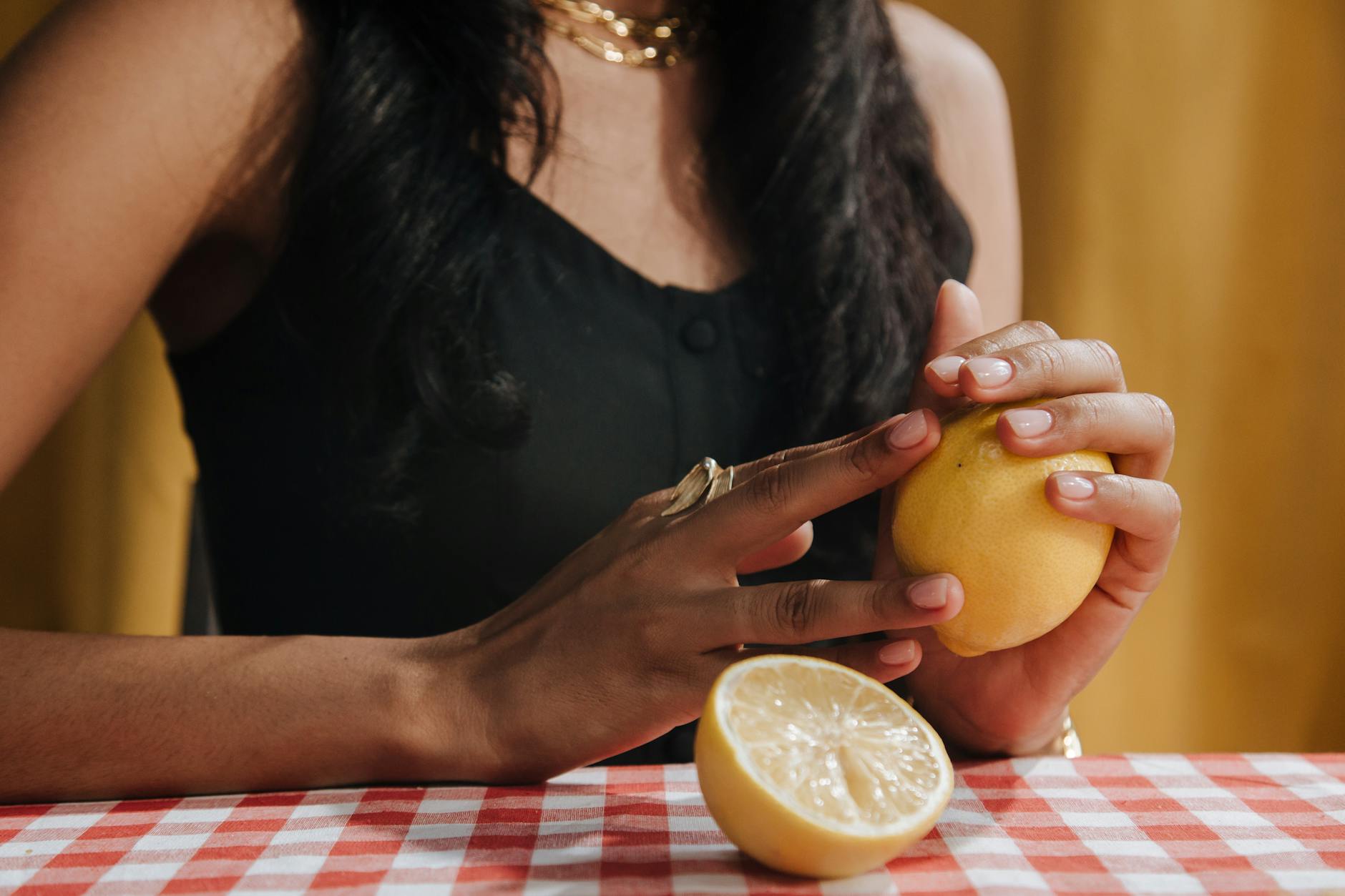
Solo pleasure is not a statement about your partnership
Here's the thing that nobody tells you: having a lemon vibrator for solo time when you're partnered isn't a referendum on your relationship. It's not a sign that something's missing. It's just you, alone, exploring what feels good on your own terms. And honestly, it's one of the healthiest things you can do for your long-term connection.
I've worked with hundreds of couples, and the ones with the strongest sexual foundations are almost always the ones who've claimed solo pleasure without apology. There's no confusion, no resentment, no scorekeeping. Just clarity.
Why solo time matters inside a partnership
When you're in a relationship, pleasure often becomes a negotiated thing. You sync your arousal. You manage each other's expectations. You work around schedules, energy levels, and moods that don't always align. That's not bad. It's just real.
But when you have solo time with a lemon vibrator, something shifts. You get to know your own body without an audience. You discover what speeds work best for you, what patterns make your brain go quiet, how long your actual arousal curve takes when nobody's waiting. That knowledge is power.
When you come back to partnered sex, you're not guessing anymore. You can say "I like it this way" with certainty instead of hesitation. That certainty is attractive. It's also genuinely better sex.
The communication that actually matters
If you're partnered, there's usually one conversation that needs to happen first. Not "I bought a lemon vibrator," but rather "I want dedicated time for solo pleasure because it helps me understand my body better."
The why matters more than the what. Most partners who feel threatened are threatened because they're imagining they're being replaced, not because vibrators are scary. When you frame it as self-knowledge rather than dissatisfaction, the framing usually lands.
If your partner pushes back, that's not a vibrator problem. That's a control problem, and it's worth naming. Your body belongs to you. Solo time with a clitoral vibrator is non-negotiable self-care, not something that needs permission.
If your partner is curious rather than threatened, you might actually enjoy having these conversations. Some couples I work with find that talking about solo pleasure opens up a bigger conversation about desire, fantasy, and what they're each craving. It becomes an intimacy-builder rather than a wedge.
Creating the right conditions for solo play
Solo time deserves the same setup as partnered time. That doesn't mean candles and rose petals if that's not your thing. It means: privacy, time you're not stealing from something else, and mental space.
Lock the door. Put your phone away. Set a timer if you need to mentally close a loop. Most people I work with find they need 20 to 45 minutes to actually drop into the experience. The first 10 minutes are often just your nervous system catching up to the fact that you're allowed to be here.
For using a lemon clitoral vibrator solo, start with the lower intensities on the Lem. Explore without a goal. Notice what patterns make you pause, what rhythm causes your breathing to change, where the sensation is most concentrated. You're mapping your own body, not racing toward an orgasm.
When you're partnered, solo time often feels like it needs to "count" or lead somewhere. Give yourself permission to just play. Sometimes the best discoveries happen when you're not trying.
The lemon vibrator advantage for solo exploration
Lemon vibrators like the Lem use air-pulse suction, which means you get broader stimulation than a traditional vibrator. For solo play, this is genuinely useful. You can vary the pressure just by adjusting how you position yourself. You get immediate feedback about what your body wants in real time.
If you find yourself holding tension, dial it back. If you're chasing sensation that feels distant, try the reverse. The Lem's range of patterns gives you a lot of territory to explore without needing multiple toys.
Many people also find that solo time with a lemon sucker feels different from partnered sex in a way that's actually helpful. The focused, individual attention to your body can make you more aware of sensation you might otherwise gloss over.
What changes (and what doesn't) in partnered sex
Once you've established a solo routine, some couples find their partnered sex shifts. Usually in good ways. You're less likely to be performing or managing someone else's experience because you already know what you want. You're also less likely to fake pleasure or dial things down for your partner's comfort.
That clarity can feel like permission to your partner too. Knowing you're satisfied solo means they can stop worrying about whether they're "enough." Paradoxically, that often makes partnered sex hotter.
Some couples find they incorporate solo time into their partnered routine. Your partner watches you use your lemon vibrator solo, or you use it together, or you trade. That's worth exploring only if both of you are interested. Don't do it to "prove" anything. Do it because you're curious.
Managing the mental stuff that comes up
Here's where things get real. Some people feel guilty about solo pleasure when they're partnered. That guilt usually comes from one of three places: they were taught pleasure was selfish, they absorbed a message that wanting anything separate from their partner means something's wrong, or they're genuinely in a dynamic where control is being exerted.
The first two are worth examining. Solo pleasure isn't selfish. It's self-respect. Your desires don't disappear when you partner up. Neither should your right to explore them.
The third one is more serious. If you feel like you need permission to be alone with your own body, or if expressing this need triggers real fear, that's worth talking through with a therapist. A good partnership makes space for both togetherness and separateness.
Setting realistic expectations
You might discover you orgasm more easily solo than with your partner. That's completely normal and has nothing to do with your partner's adequacy. Solo play is lower-pressure. Your nervous system knows you're safe. There's no performance element. That's honestly the point.
Don't use solo pleasure as a benchmark for partnered sex. They're different experiences serving different purposes. Solo time is about knowing yourself. Partnered time is about connection and synchronization.
Some people solo weekly. Some do it monthly. Some do it rarely. There's no prescription. What matters is that it happens without shame and without it being weaponized in your relationship.
When to involve your partner more directly
If solo time starts feeling necessary to access pleasure at all, that's worth pausing and examining. There's a difference between "I like solo time" and "I can only feel good alone." The latter usually points to something in the partnered dynamic that needs attention.
That doesn't mean give up solo time. It means also bring a therapist into the conversation. A lot of couples I work with find that reclaiming solo pleasure and addressing partnership issues at the same time creates real breakthroughs.
Your lemon vibrator is a tool for your own body. It's not responsible for fixing what might be broken in your relationship. But it can absolutely be part of reclaiming your pleasure, which is often the ground on which everything else gets rebuilt.
Quick reality check
If using a lemon clitoral vibrator solo feels like you're being unfaithful or betraying your partner, that's a sign the dynamic needs examining. Solo pleasure is not infidelity. It's not a substitute for your partner. It's an act of self-knowledge that almost always makes you a better, more honest partner.
Your pleasure matters. Your body belongs to you. A lemon sucker vibrator is just a tool that helps you pay attention. That's all it needs to be.