When kids and stress become the third person in your relationship
You know the rhythm. Dinner, bath time, bedtime stories, the collapse into your own bed at 9 p.m. Your partner is already half-asleep. You're both running on fumes. The idea of sex feels like another task on an already impossible to-do list, and the last thing either of you wants is more pressure.
That's not a dead bedroom. That's life. And that's also exactly when most couples stop trying, assuming desire will magically return when things calm down. Spoiler alert: it won't.
What I see repeatedly in my practice is that couples with kids don't lose attraction. They lose access. They lose the mental space to feel aroused when they're also mentally cataloging tomorrow's schedule, calculating sleep debt, or managing the background hum of parental anxiety. Adding a physical tool that works fast and feels good isn't about replacing connection. It's about buying back your bodies as a couple.
Why lemon vibrators change the math for stressed couples
Let me be direct: most traditional vibrators require a lot of your brain to make them work. You're thinking about intensity, positioning, technique. When you're already cognitively overloaded, that's one more thing to manage.
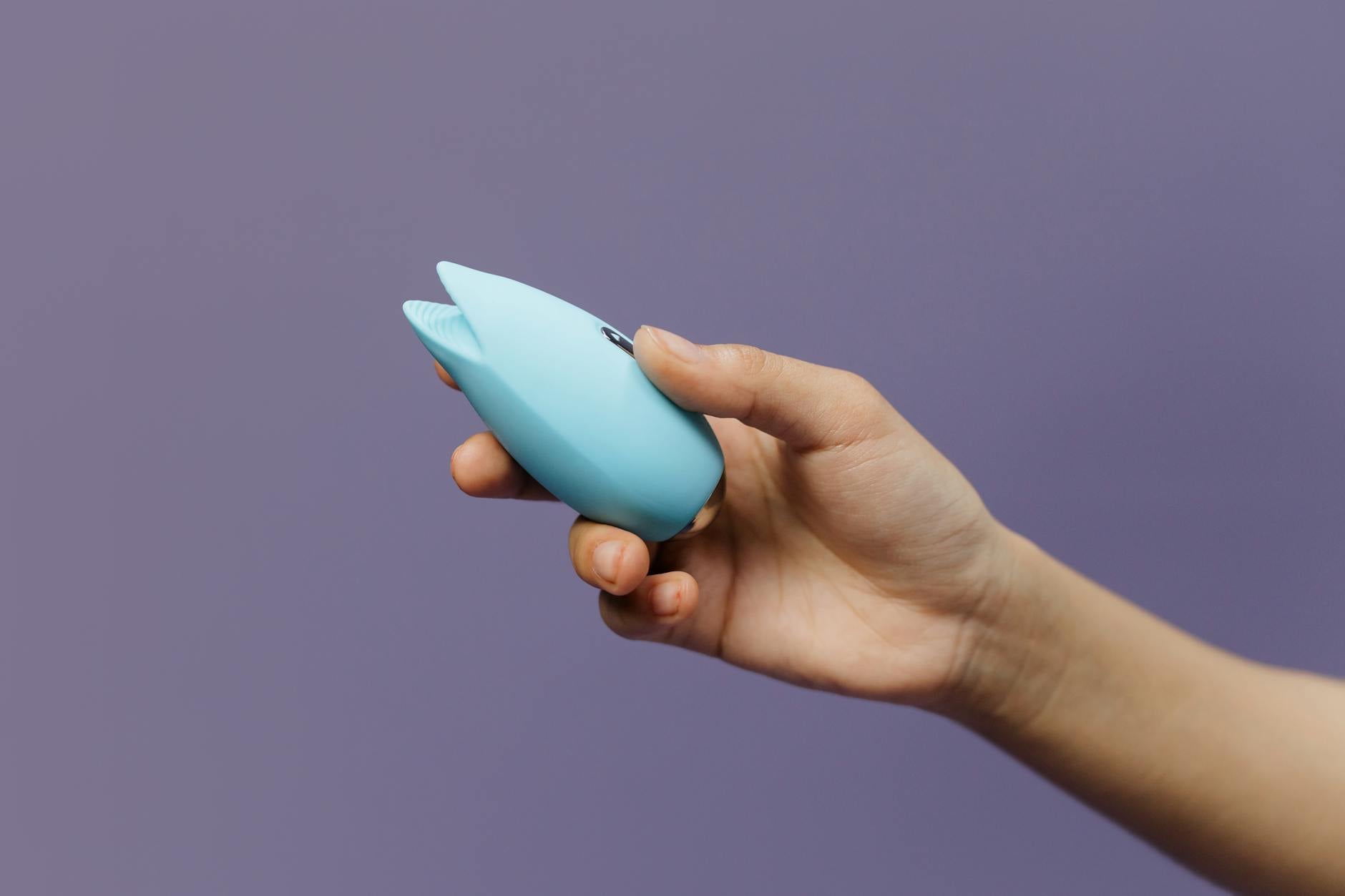
Lemon clitoral vibrators, designed to use gentle suction and pulse patterns, change that equation. They work with your body instead of asking your body to work harder. The research on suction-based stimulation shows faster, more consistent arousal response, which means you spend less time waiting to feel something and more time actually feeling good. For couples in survival mode, that efficiency matters.
Here's what shifts when you introduce a lemon vibrator into a stalled intimacy routine:
You reduce the arousal gap. If one partner takes 20 minutes to warm up and the other takes 5, traditional foreplay becomes a negotiation. A lem vibrator levels that playing field. Both partners can reach engagement within a similar timeframe.
You make pleasure feel urgent rather than obligatory. Quickies stop feeling like you're checking a box and start feeling like stolen time together. That's the mindset change that actually rebuilds intimacy.
You take pressure off penetration or specific outcomes. A lemon clitoral vibrator can be the main event instead of opening act. If you're both exhausted, you can enjoy mutual pleasure without the performance anxiety of "I need to last long enough" or "I need to come easily."
The psychology of connection when life is full
There's something specific happening in the brains of overwhelmed parents that's worth naming. When you're in charge of someone else's survival, your nervous system stays half-activated. You're never fully in your body because part of your brain is always on call, listening for the kid who can't sleep or the partner who needs something.
Intimacy requires the opposite. It requires you to be in your body, in the moment, with another adult who isn't asking you for anything except presence.
That's a bigger ask than it sounds. And it's why introducing something physical and responsive helps. A lem vibrator is a boundary marker. It says: this is not parenting time, this is adult time, this is about sensation. Your brain gets permission to step out of survival mode and step into pleasure.
For couples I work with, the conversation shift is huge. Instead of "Can we try to have sex sometime this week?" it becomes "I want to feel you tonight." Different stakes. Different tone. Different meaning.
Creating the conditions that make it actually happen
I'll be honest. Handing your partner a lemon vibrator and hoping for the best is like expecting a houseplant to water itself. The tool helps, but the intention has to come first.
Here are the conditions I recommend:
First, make space non-negotiable. Not someday. Not when the kids are older. Now. This means a locked door, a 20-minute window, and agreement that this time belongs to both of you. That might mean one partner is in charge of logistics (keeping the kids occupied). One partner is in charge of the mood. Both are in charge of being present.
Second, lower your standards for what counts. If you're thinking this has to be a full seduction scene, you've already lost. The best sex for exhausted couples is the kind that happens at 6 a.m. on a Sunday, still half-clothed, without a big production. A lemon vibrator actually makes these low-friction encounters feel genuinely good instead of just efficient.
Third, talk about what you actually want, not what you think you should want. Most couples don't. They assume, they hint, they get disappointed, they stop trying. One conversation where you both say "Here's what would feel good to me" and "Here's what I can offer right now" can shift everything.
How this looks in practice
One couple I worked with had gone 18 months without any sexual contact after their second child arrived. Both partners felt disconnected. Both assumed the other had lost interest. When they finally talked about it, they realized they were both exhausted and neither wanted to initiate something that might be complicated or time-intensive.
Introducing a lemon vibrator wasn't about fixing their sex life. It was about giving them a tool that matched their current capacity. Instead of aspirational sex that required energy they didn't have, they had quick, satisfying experiences that reminded them their bodies still worked together.
Three months in, without any other intervention, they reported feeling closer. Not because the vibrator was magic. Because they'd reclaimed that space and started associating physical touch with pleasure again instead of obligation.
The same pattern shows up in couples where one partner has a much higher libido than the other. When desire is mismatched, sex often becomes a source of rejection for the higher-desire partner and pressure for the other. A clitoral vibrator reframes things. The higher-desire partner gets pleasure without needing their partner to perform. The lower-desire partner isn't being asked to be something they're not. Both get to feel less defensive.
When to expect to feel the difference
Pleasure works on a timeline that doesn't match expectations. You're not going to use a lemon vibrator once and suddenly feel deeply connected to your partner again. That's not how it works.
What you might notice in the first week: your body remembers what arousal feels like. Your nervous system shifts from "on guard" to "alert in a good way." Small thing. Big effect.
In the second and third week: you start thinking about that time differently. Instead of dread or obligation, it becomes something you're actually interested in. Your partner notices. The tone between you softens.
A month in: you've probably had the talk about what you actually want. You might be trying different positions or scenarios. You're touching each other more casually because you're not worried it has to lead somewhere specific. You're laughing more during sex, which is a dead ringer for couples getting back in sync.
None of this requires your stress to disappear. Your kids are still there. Your work is still demanding. But your body has a clearer sense that pleasure is possible, and that you and your partner are still a team.
What makes lemon clitoral vibrators different for this specific situation
You might ask: why not just any vibrator? The answer has to do with design and, honestly, ergonomics for overwhelmed humans.
Traditional vibrators require battery swaps, complicated cleaning, lengthy warm-up time. When you're operating on limited time and energy, friction like that kills momentum. Lemon vibrators are designed for speed and simplicity. Quick charge. Simple maintenance. Intuitive buttons. You're not spending mental energy figuring out how to use it.
The suction mechanism also means less direct friction, which matters if either partner has sensitivity concerns from stress, medications, or just from years of tension holding in the pelvic floor. You get pleasure that feels responsive without feeling harsh.
And there's something about the aesthetic that matters too, though people don't often say it out loud. A lot of partners appreciate that these are beautiful objects. They don't feel medicinal or clinical. If you see a lemon vibrator on the nightstand, it doesn't feel like a reminder that something is broken. It feels intentional. It feels grown-up.
When to bring it into the conversation
Timing is everything. You don't want to introduce this as a fix or an accusation. You also don't want to wait until resentment has calcified.
The best conversation I've seen go like this: "I miss feeling close to you. Life is crazy right now and I don't want us to drift. I found a tool that I think could help us. I'm not saying anything is wrong. I'm saying I want to protect us." That frames it as collaborative. As something you're doing together, not something one person is doing to the other.
If your partner is resistant, that's information worth exploring. Often it's not about the tool. It's about feeling pressured, or guilt that they can't give their partner what they want, or shame about their own body changing. Those conversations need to happen anyway. The vibrator just gives you a reason to have them.
FAQ: rebuilding intimacy when life gets in the way
How long does it take for a couple to reconnect physically after having kids?
There's no universal timeline. Some couples reconnect in weeks. Others take months or years. The difference is usually whether they're actively trying. Couples who talk about it, set aside time, and remove shame tend to rebuild much faster than couples who assume it will happen naturally when things calm down. In my experience, having a concrete tool like a lemon vibrator actually accelerates this because it removes decision fatigue.
Can using a vibrator make a partner feel like I don't want them?
Not if you frame it correctly. A vibrator is a tool you're using together, not a replacement for your partner. The way I think about it: it's like using a hand blender instead of a whisk. Both work, one is just more efficient. If your partner has anxiety about this, a conversation where you explicitly say "I want you. I also want us to have pleasure right now" usually shifts things. Sometimes you also need to ask what they're worried about. Fear often sounds like resistance.
Is it normal to have zero interest in sex after kids?
Completely normal. Parental exhaustion, hormonal shifts if you gave birth, depression, anxiety, autoimmune conditions, medications, resentment about unequal labor. All of that kills libido. The key question isn't "Is this normal?" It's "Is this something I want to change?" If yes, sometimes the answer is therapy or medical evaluation. Sometimes it's reclaiming a sense of yourself as a sexual being. Often it's both. A vibrator can be part of that reclamation, but it's not the whole answer.
What if my partner wants sex way more than I do?
That mismatch is one of the most common issues I see, especially in early parenthood. A lemon vibrator can help because it means the higher-desire partner can have pleasure without needing the lower-desire partner to provide it. But this also usually requires a real conversation about what's driving the mismatch. Is it exhaustion? Is it anxiety about your body? Is it resentment? Those pieces matter. The tool helps. The conversation heals.
Can using a vibrator together actually improve emotional intimacy?
Yes, but not magic yes. It can if it creates space for vulnerability, pleasure, and playfulness. Those things do rebuild emotional connection. But the vibrator is a vehicle, not the destination. A couple can use a vibrator together and still be avoiding real intimacy if they're not willing to be honest. That said, when couples are willing to be honest, adding physical pleasure back into the relationship absolutely softens the walls and makes emotional connection easier.
How do I know if we need help beyond a vibrator?
A vibrator is a great starting point, but if either partner is depressed, if there's untreated anxiety, if there's infidelity or ongoing trust issues, or if one person feels resentful about the division of labor in the home, a vibrator won't fix that. You might need a therapist. But a therapist and a vibrator? That combination is powerful. One handles the emotional architecture. One reminds your body that pleasure is possible.
The truth about rekindling intimacy under pressure
You don't have to wait for life to be less demanding. You don't have to reach some imaginary point of calm before you reconnect with your partner. Life with kids is chaotic. That's not changing. What you can change is whether you're making space for pleasure right now, in the life you actually have.
A lemon vibrator isn't a marriage savior. But it is a permission slip. It says: your pleasure matters even when you're tired. Your body still works. Your partner still wants you. And you have 20 minutes to remember all of that together.
If that sounds like something you need right now, that's your answer. Start the conversation with your partner this week. Not someday. This week.