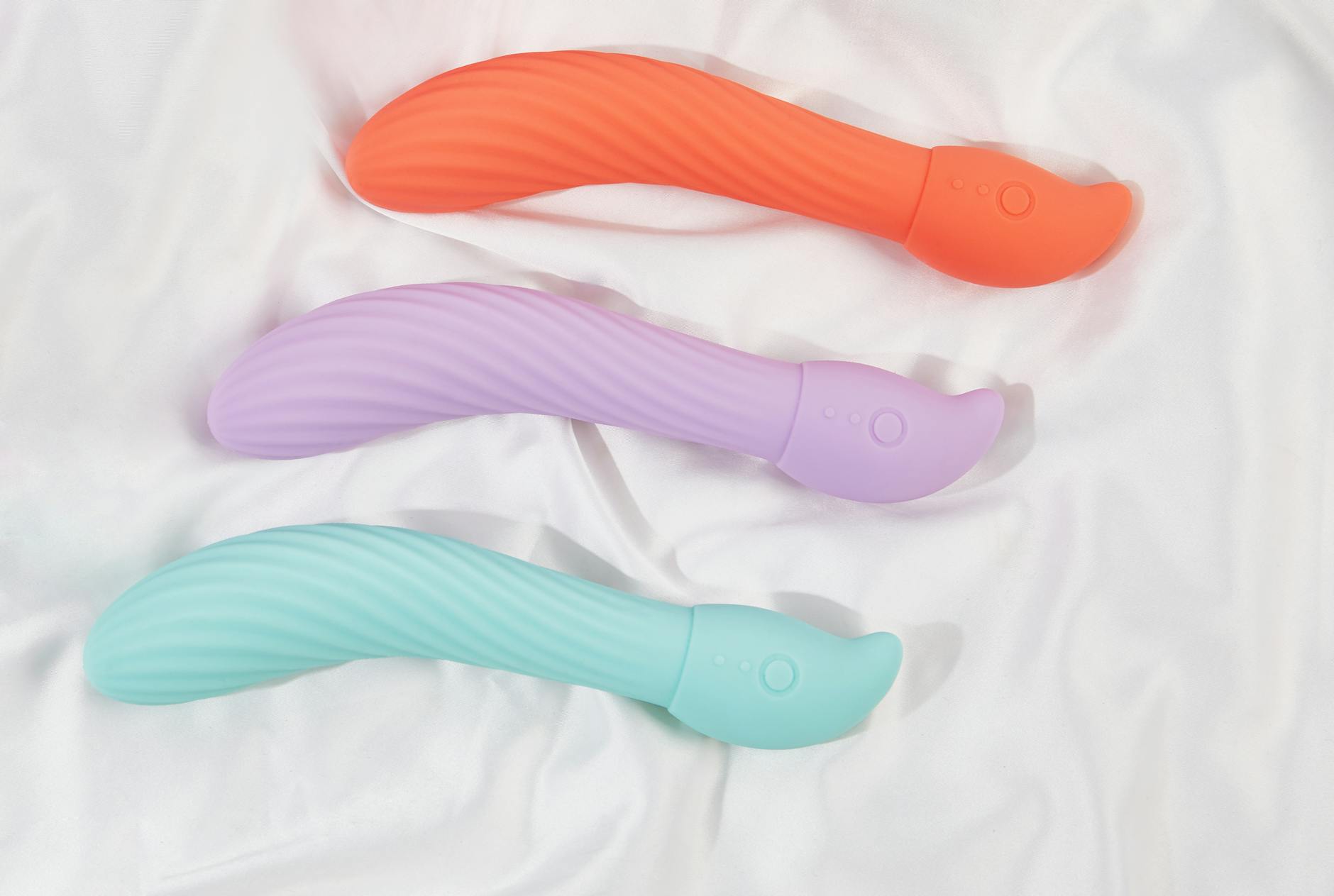
Here's what nobody tells you about sensation and aging
Your clitoris doesn't stop working. Your nerve endings don't vanish. What changes is the speed and intensity needed to wake them up. That's not a problem. That's just information you can use.
Most people assume muted sensation means game over. It doesn't. It means the approach that worked at 25 needs recalibration at 45 or 55 or 65. A lemon vibrator, specifically the air-suction design that Hello Nancy makes, works differently than the vibrations you might be used to. Instead of relying on pure intensity, it uses gentle suction waves that stimulate nerve clusters without requiring the kind of sustained pressure that can feel uncomfortable or numb on maturing skin.
I've worked with hundreds of clients navigating this shift, and the pattern is always the same. Women come in thinking they've lost sensation permanently. After trying the right approach, they realize they've just been using the wrong tools for their changing body.
Why sensation naturally shifts as you age
Three main culprits are at play here, and none of them are permanent.
Hormonal changes reduce blood flow. Without steady estrogen, the tissues around the vulva get thinner and drier. This isn't just about lubrication. When tissue density drops, the space between nerve endings increases slightly. Your nerves are still firing. The signals just travel a longer distance.
The clitoral glans becomes less exposed. As collagen breaks down over decades, the hood can become less mobile. The clitoris is still sensitive, but reaching it sometimes requires a different angle or pressure pattern than before.
Skin loses elasticity and nerve sensitivity overall. This isn't unique to the vulva. Aging skin everywhere becomes less responsive to light touch. That's why a gentle brush feels less intense at 50 than it did at 30.
What doesn't change: the number of nerve receptors in your clitoris, your brain's pleasure centers, or your capacity for orgasm. The architecture is still there. The wiring is still connected.
How lemon suction vibrators work differently
A traditional bullet or wand vibrator relies on oscillating motion. Fast, focused vibration. That works great when tissue is thick and blood flow is robust. But on mature vulvas, sustained high-frequency vibration can feel numbing or irritating.
A lemon vibrator like the Lem uses pulsing air-suction technology. Instead of vibrating against the tissue, it creates a gentle rhythmic sucking sensation. Here's why that matters for aging bodies:
Suction waves stimulate the entire nerve cluster at once, not just the surface. Your clitoris has thousands of nerve endings, but they're clustered in layers. Vibration mostly hits the outermost layer. Suction reaches deeper.
You control the intensity by adjusting the suction pattern, not by adding painful pressure. If pattern 2 feels too strong, you drop to pattern 1. No guessing whether you're about to hurt yourself.
The sensation builds gradually. With suction, arousal often feels like a slow unfurling rather than an immediate spike. For aging bodies where blood flow is slower anyway, this gradual build actually matches your natural arousal curve better.
The practical adjustment that changes everything
When sensation feels muted, most people's instinct is to reach for something stronger. More intensity. Louder vibration. Longer sessions.
That backwards. Here's what actually works:
Start lower. If you've never used a lemon clitoral vibrator, begin at pattern 1 or 2, not pattern 5. Spend 10-15 minutes there. You'll be surprised how much sensation emerges once you're fully aroused. The suction technology means you don't need to start at maximum to feel something.
Extend warm-up time. Arousal is slower at 50 than it was at 30. Budget 20-30 minutes before you're expecting intense sensation. This isn't a bug. It's actually an advantage. You get longer foreplay, more time to explore, more data about what feels good.
Adjust positioning. The angle that worked for decades might not anymore. Try placing the Lem directly over the clitoral glans, or slightly off to one side. Your body will tell you what lands. Listen to it.
Experiment with patterns. The Lem has multiple pulse rhythms. Your aged vulva might respond better to pattern 3 (a pulsing rhythm) than pattern 1 (steady suction). Try them all. Sensation changes month to month and year to year. What worked last month might shift.
When reduced sensation isn't about age
Sometimes muted sensation isn't purely biological. Stress, anxiety, medication, or disconnection from a partner all suppress arousal and physical response. If you've been experiencing medication side effects or relationship strain, work on those first. A lemon vibrator will help, but it won't fix an underlying issue that's psychological or relational.
If you're dealing with medication side effects specifically, a clitoral vibrator can help bridge the gap while you talk to your doctor about adjustments. Many medications suppress sensation. Many have alternatives. Don't suffer silently thinking it's just aging.
What partners need to know
If you're using a lemon vibrator with someone, the conversation matters more than the toy. Let them know that slower arousal and different sensation needs aren't rejection. They're just information. "I need more time to warm up" is completely different from "I don't want you."
Many partners feel defensive when sensation changes. They think it's about them. It isn't. It's biology. Separating that conversation from the intimacy conversation is crucial. You can have a vibrator in the picture and still maintain deep connection. In fact, many couples find that introducing one actually deepens things because it removes the pressure to perform a particular way.
How to know if a lemon vibrator is right for you
Consider one if:
- You've noticed arousal takes longer than it used to
- Direct pressure or high-frequency vibration feels irritating or numbing
- You're dealing with tissue changes from aging (thinning, dryness, reduced elasticity)
- You want something that builds sensation gradually rather than hitting hard immediately
- You're interested in how lemon clitoral vibrators work with partners who have different arousal speeds
If you're experiencing pain during arousal or complete absence of sensation despite trying different approaches, talk to a doctor about tissue changes. Genitourinary syndrome of menopause (GSM) is real and treatable. A vibrator helps, but topical estrogen creams sometimes help more.
The piece that changes the math
Aging doesn't mean less pleasure. It means different pleasure. Often better pleasure, because you know your body better. You care less about performing for an audience (real or imagined). You know what you actually want instead of what you think you should want.
Muted sensation is frustrating. But it's not permanent, and it's not rare. Adding the right tool (a lemon vibrator designed for subtle stimulation) to the right approach (slower warm-up, lower starting intensity, patience) usually restores sensation quickly. Within a few sessions, most people report feeling more sensation than they did in months.
Your pleasure didn't go anywhere. It just needed a different key to unlock it.
FAQ
Can a lemon vibrator actually restore sensation that's disappeared completely?
Not if "completely" means zero feeling whatsoever, which is rare. Most people reporting muted sensation can still feel touch. They just need more time, the right type of stimulation, or both. A lemon clitoral vibrator's suction technology often wakes up sensation that felt dormant because it works on a different principle than traditional vibration. If you genuinely cannot feel anything despite trying multiple approaches over weeks, see a healthcare provider. That could signal a neurological issue unrelated to aging.
Is it normal for sensation to keep changing year to year as I age?
Completely normal. Hormones fluctuate even post-menopause. Stress, medication changes, sleep, hydration, and relationship status all affect sensation acutely. What feels muted one month might feel fine three months later. This is why experimenting with different patterns on a lemon vibrator helps. You're learning your body's current language, not its permanent one.
Does using a lemon vibrator make sensation even more muted over time?
No. That's a persistent myth about vibrators generally. Your nerve endings don't become desensitized from suction stimulation the way some people worry they might from intense vibration. In fact, regular use often improves sensation because arousal primes the nervous system. The more you practice, the more responsive you become.
What if I find a lemon vibrator too intense even on the lowest setting?
Start with the lowest pattern and hold it further away from the clitoris at first. You can also wear underwear and experiment through the fabric. The sensation will be muted but detectable, which lets you acclimate before direct contact. Many people don't realize how much sensation translates through fabric until they try it.
Can a partner use a lemon vibrator on me, or is it just for solo use?
Partners can absolutely use one on you. Hand control is actually easier than some other toy styles because the Lem's intuitive button layout means they're not fumbling. The suction sensation often feels more intimate because it's less mechanical-feeling than traditional vibration. Just communicate about pressure and intensity in the moment.
Is there an age when sensation changes stop being normal?
Not really. Sensation continues to shift throughout life. At 60, you might notice changes different from those at 50. At 75, different again. This isn't failure. It's adaptation. The goal isn't to feel exactly like you did at 25. It's to understand your current body and work with it, not against it.
What to do now
If muted sensation has been frustrating you, the first step isn't buying anything. It's reframing the situation from "I'm broken" to "My body needs a different approach." That mindset shift actually restores more sensation than most tools ever could.
Then, if you want to experiment, try a lemon vibrator. The suction design genuinely works differently than what most people have tried. Start low, go slow, and give yourself several sessions before deciding if it's right for you.
Your pleasure is still there. You're just learning the new language your aging body speaks. That's not less. That's different. And often, different is better.
Questions about how this might work for your specific situation? Reach out to us. We're here to help you figure out what will actually serve your body as it ages.