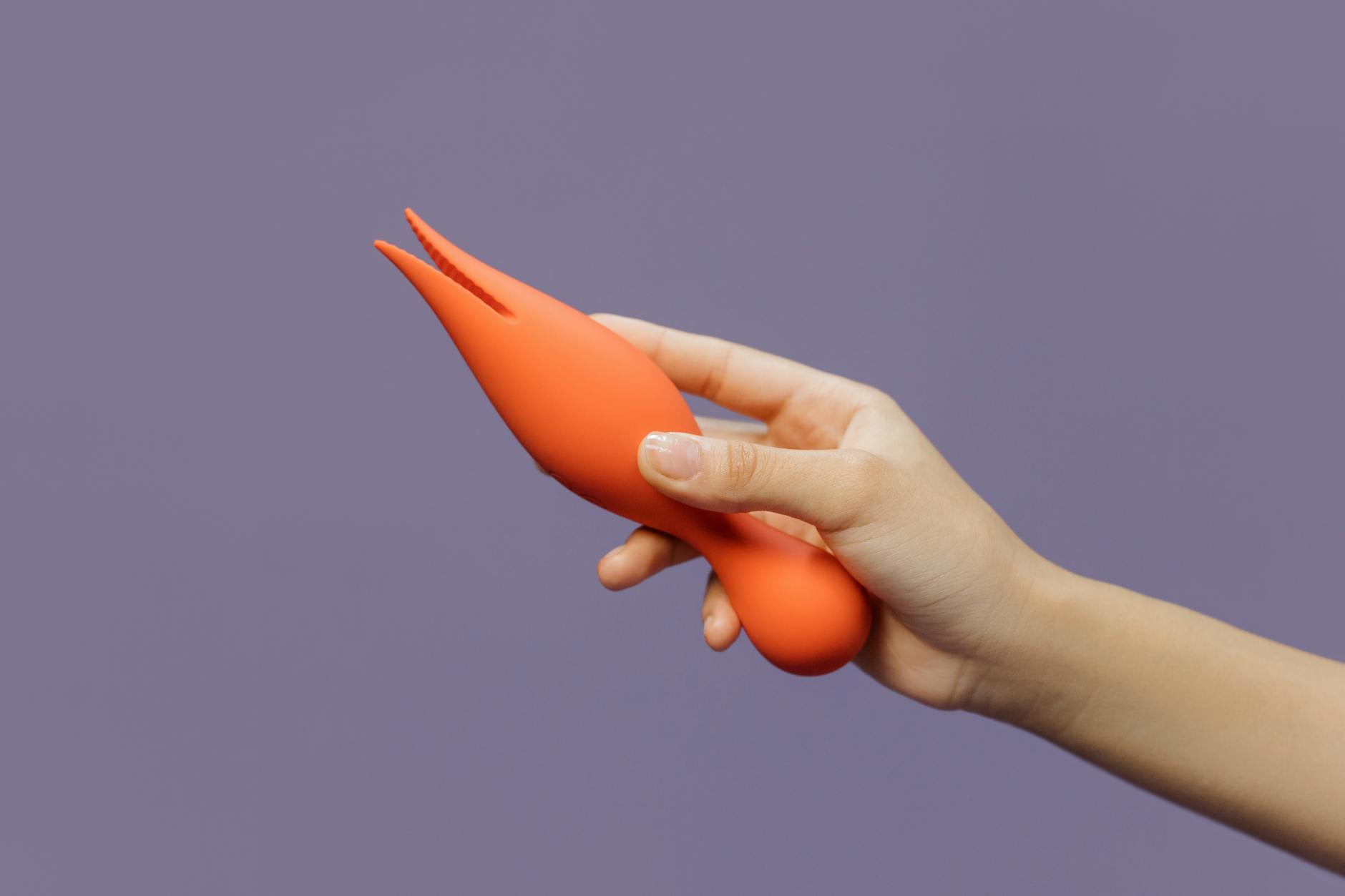
Your clitoris doesn't change. The nerve endings stay put. But the tissue surrounding it does shift, and that changes everything about how stimulation feels. After hormonal changes, childbirth, grief, weight fluctuations, or just time passing, direct vibration sometimes goes from pleasurable to uncomfortable or just meh. A lemon vibrator works differently because it doesn't vibrate. It sucks. And for many people navigating these shifts, that difference is everything.
Your clitoral tissue is sensitive to both estrogen and testosterone. When either or both drop, the tissue thins slightly. Blood flow patterns shift. The surrounding vulvar tissue changes shape. None of this means pleasure is gone. It means the kind of sensation that worked last year might feel too intense, too sharp, or not quite right anymore.
Vibration works by creating rapid micro-movements across tissue. For thin or newly sensitive tissue, that can feel almost scratchy. Suction, by contrast, creates a gentle pull and release. It stimulates the nerve endings without the same mechanical friction. The sensation is deeper, less sharp, and many people find it builds pleasure more steadily.
That's why people often tell me that a lemon clitoral vibrator feels softer, more controlled, and somehow more intimate than traditional vibrators after their body has changed.
Not all suction toys are the same intensity. If your tissue is freshly sensitive, you need to start low.
The Lem, Hello Nancy's lemon clitoral vibrator, has multiple intensity settings. I tell most people with recent tissue changes to start at setting 1 or 2, not the top of the range. Let your body wake up to the sensation over several sessions before you jump to higher intensities.
Settings 1 and 2 feel almost like a gentle kissing sensation. There's suction happening, but it's subtle. After a few weeks of regular use, your tissue acclimates and you can experiment with higher settings. Many people find they actually prefer the gentler settings even after acclimation, which is completely valid.
Start with 10-15 minute sessions. This isn't a sprint. Your nervous system is relearning what pleasure feels like, and rushing it backfires. I've worked with clients who gave up on devices after twenty minutes of high intensity on day one, then came back six months later and had a completely different experience starting at setting 1.
Before tissue changes, you might have skipped foreplay or jumped straight in. Now, warm-up is doing real work.
Spend 5-10 minutes on non-clitoral touch first: your inner thighs, labia, the whole vulva, your breasts, your neck. Let your body actually get aroused before you introduce the lemon vibrator. This brings blood flow to the clitoris and plumps the tissue slightly, making stimulation feel better and safer.
If you're with a partner, this is a moment to actually connect. This is not down time. This is foreplay that directly increases your pleasure. Many couples find that when they reframe warm-up as essential rather than optional, the entire experience shifts.
If your tissue is drier than it used to be, a water-based lubricant isn't a workaround. It's part of the sensory experience. Lube changes how the suction feels. It creates a better seal, sometimes makes the sensation feel smoother, and absolutely affects your comfort.
Apply lube to the lemon vibrator and to your vulva. Don't be stingy. Reapply if it dries out mid-session. This isn't a sign something is wrong. It's just biology. The longer you use the toy, the more natural lubrication builds, but starting with external lube means better sensation and zero friction.
If you have a partner, this is worth communicating about directly. You're not broken. Your body isn't failing. It's just different, and different often means better if you approach it with curiosity instead of disappointment.
Many partners feel relieved when they learn that lemon suction toys are actually easier to use together than traditional vibrators. The toy is less intrusive, the sensation is more localized, and there's more room for penetration if that's part of what you want. Some couples find that switching to suction actually opens up new possibilities they hadn't considered.
The key is not to make this about loss. Make it about exploration. "I've noticed my body is responding differently, and I want to figure out what feels good now" is a completely different conversation than "I'm broken and nothing works anymore."
If your tissue has changed due to menopause, you might see shifts within 4-6 weeks of regular use. If change came from childbirth, partner changes, or other sources, it could be faster or slower. There's no universal timeline.
Orgasms might feel different too. Maybe they're smaller, more concentrated in a specific spot. Maybe they're deeper, more full-body. Maybe the buildup is slower but the release is more intense. All of these are normal. Your job is observation, not judgment.
I work with clients who found that their most satisfying orgasms came after their body changed, precisely because they had to slow down and actually pay attention to what worked. One client told me, "For twenty years I had good sex on autopilot. Now I have to be present, and the sex is actually better." That's not a polite thing to say in therapy. That's what she genuinely experienced.
If you're experiencing pain, not just discomfort, a menopause-trained GP or pelvic health physical therapist is worth seeing. Genitourinary syndrome of menopause (GSM) is real and highly treatable, sometimes with topical estrogen creams or pelvic floor therapy.
If desire has completely disappeared and hasn't returned after a few months of exploration, hormonal assessment might help. Testosterone therapy, HRT adjustments, or other interventions can make a real difference, and they're worth discussing with someone who specializes in this.
But if the issue is just that direct vibration doesn't feel right anymore, a lemon clitoral vibrator paired with patience and warm-up is often exactly what does the job. No medical intervention needed. Just rediscovery.
Here's what I know after working with hundreds of people through body shifts: pleasure is not a fixed thing that you either have or lose. It's a moving target that changes as your body changes. The people who find their way back to consistent, satisfying pleasure are almost never the ones trying to recreate what they had before. They're the ones willing to discover what's possible now.
A lemon suction toy is a tool for that discovery. It's not magic, and it's not a fix for everything. But it is specifically designed to work with tissue that's changed, to provide sensation without friction, and to let you take your time finding what feels good again.
Start at setting 1. Take fifteen minutes. Use lube. Let your body respond at its own pace. The pleasure is still there. It just might look different than it did before. And honestly? Different often means better.
There's no fixed timeline. Most people notice meaningful shifts in sensation and comfort within 4-6 weeks of regular use with the right toy and approach. But "readjustment" isn't really the goal. Discovery is. Some people find that sensation shifts again month to month. Others settle into what feels good and stay there. The key is checking in with yourself regularly instead of assuming the first experience is the final verdict.
You can use whatever works for you. But many people find that traditional vibration feels sharper or less pleasant after tissue changes, while suction feels gentler and more satisfying. A lemon vibrator is worth trying specifically because it's designed to work differently. That said, some people prefer traditional vibrators even after changes. The only way to know is experimentation.
Not at all. Lube is just a tool that changes how sensation feels. Using it consistently is normal and doesn't indicate a problem. It often means better sensation, better comfort, and more pleasure. Stop thinking of it as a workaround and start thinking of it as part of the experience.
If your body has changed and neither of you is sure how to navigate it together, a therapist who specializes in couples and sexuality can be wildly helpful. The issue usually isn't the body change itself. It's the communication gap around it. A good therapist can help you both talk about what's happened and what you actually want now instead of what you had before.
Maybe, maybe not. But that's not really the useful question. The useful question is: what feels good now? Because if you spend all your energy trying to recreate a past sensation, you'll miss discovering sensations you've never had before. I've worked with people whose pleasure actually deepened after their body changed because they finally had to pay attention.
Suction toys are useful across every age, but they're especially popular with people navigating menopause, post-pregnancy changes, or any shift in tissue sensitivity. Younger people with naturally sensitive tissue, vulvodynia, or other conditions also find them helpful. It's not about age. It's about how your tissue responds to different kinds of stimulation.
Your body didn't break. It changed. A lemon clitoral vibrator is one tool for rediscovering what pleasure feels like in your new body. But the real tool is patience, exploration, and the willingness to let go of "how it used to be" and get curious about "what feels good now." If you want support navigating relationship shifts around these changes, reach out to talk with someone who specializes in this. We're here to help you find your way back to pleasure, whatever that looks like for you now. Get in touch to learn more about how we can support your journey.